
Flag of the Sultanate of Oman
Description
- Three horizontal stripes of white, red, and green with a broader red vertical stripe at the hoist bearing the national emblem (khanjar dagger and crossed swords) in white
- The emblem — two crossed swords surmounted by a khanjar (curved dagger) — has been the symbol of the Al Said dynasty since the 18th century
- The current flag was adopted on 17 December 1970 when Sultan Qaboos came to power and modernised the country. Before 1970, Oman used a plain red flag
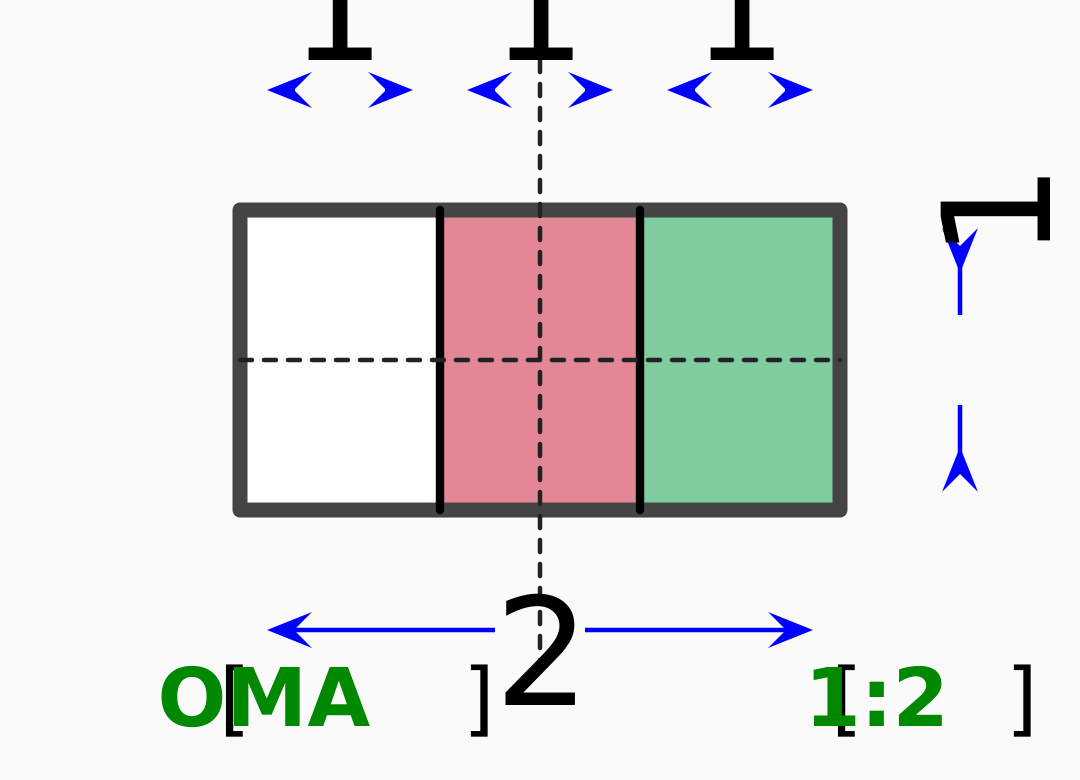
- Construction: the hoist stripe is roughly one-third of the flag's width
- Three horizontal stripes of equal height fill the remaining two-thirds
- The national emblem is centred in the red hoist stripe
- Ratio 1:2
Colors in detail
Colors
| Color | RGB Hex | CMYK | Pantone |
|---|---|---|---|
| White | #ffffff | 0/0/0/0 | |
| Top horizontal stripe; represents the Imam, peace, and prosperity. | |||
| Red | #c8102e | 0/100/80/5 | 186 C |
| Vertical hoist stripe and middle horizontal stripe; the traditional colour of Oman, representing historic battles against invaders. | |||
| Green | #009a44 | 92/0/97/0 | 347 C |
| Bottom horizontal stripe; represents the Green Mountains (Al Hajar) and fertility. | |||
Trivia
- The emblem represents Oman's sovereignty and the Imamate tradition
- The white represents peace; red represents the bloodshed for independence; green represents agriculture
- Oman adopted this flag in 1970 when the modernizing Sultan Qaboos took power
Flag of the Sultanate of Oman
Three horizontal stripes of white, red, and green with a broader red vertical stripe at the hoist bearing the national emblem (khanjar dagger and crossed swords) in white. The emblem — two crossed swords surmounted by a khanjar (curved dagger) — has been the symbol of the Al Said dynasty since the 18th century.
The emblem represents Oman's sovereignty and the Imamate tradition. The white represents peace; red represents the bloodshed for independence; green represents agriculture. Oman adopted this flag in 1970 when the modernizing Sultan Qaboos took power.
json:data
{
  "g": "nf,as,arab,gulf",
  "ns": "oman",
  "name": "Oman",
  "id": "oman",
  "index": "c/oman",
  "title": "Flag of the Sultanate of Oman",
  "ratio": "1:2",
  "use": {
    "as": "national flag",
    "since": "1995-04-25"
  },
  "colors": [
    {
      "color": "white",
      "hex": "#FFFFFF",
      "cmyk": "0/0/0/0",
      "note": "Top horizontal stripe; represents the Imam, peace, and prosperity."
    },
    {
      "color": "red",
      "hex": "#C8102E",
      "cmyk": "0/100/80/5",
      "pantone": "186 C",
      "note": "Vertical hoist stripe and middle horizontal stripe; the traditional colour of Oman, representing historic battles against invaders."
    },
    {
      "color": "green",
      "hex": "#009A44",
      "cmyk": "92/0/97/0",
      "pantone": "347 C",
      "note": "Bottom horizontal stripe; represents the Green Mountains (Al Hajar) and fertility."
    }
  ],
  "desc": "- Three horizontal stripes of white, red, and green with a broader red vertical stripe at the hoist bearing the national emblem (khanjar dagger and crossed swords) in white\n - The emblem — two crossed swords surmounted by a khanjar (curved dagger) — has been the symbol of the Al Said dynasty since the 18th century\n - The current flag was adopted on 17 December 1970 when Sultan Qaboos came to power and modernised the country. Before 1970, Oman used a plain red flag\n - **Construction:** the hoist stripe is roughly one-third of the flag's width\n - Three horizontal stripes of equal height fill the remaining two-thirds\n - The national emblem is centred in the red hoist stripe\n - Ratio 1:2",
  "of": {
    "country": "oman"
  },
  "countryData": {
    "name": "Oman",
    "officialName": "Sultanate of Oman",
    "un": "member"
  },
  "cs": "oman/flag.cs.svg",
  "trivia": "- The emblem represents Oman's sovereignty and the Imamate tradition\n - The white represents peace; red represents the bloodshed for independence; green represents agriculture\n - Oman adopted this flag in 1970 when the modernizing Sultan Qaboos took power",
  "article": "oman/flag.md",
  "flag": "oman/flag.svg",
  "_name": "Oman",
  "_namespace": "oman",
  "_namePart": ""
}