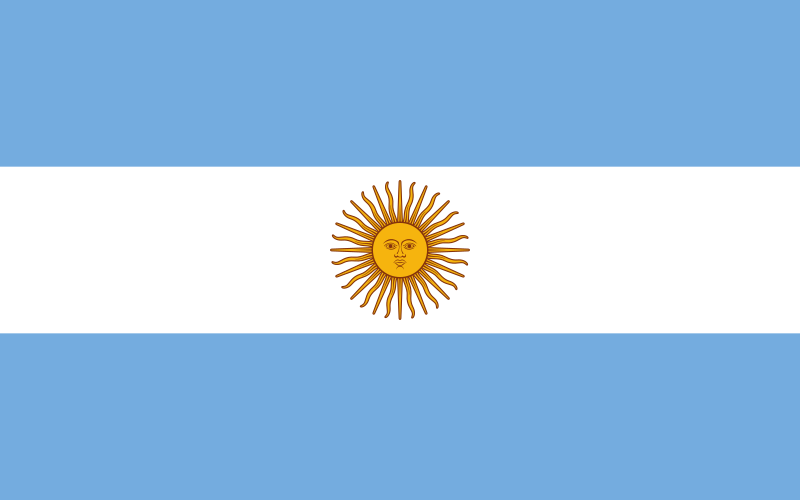
Flag of Argentina

Description
- A horizontal triband of light blue and white with the Sun of May centred on the white stripe
- The sun was added in 1818 to commemorate the May Revolution of 1810
- Official proportions were standardized as 5:8 by IRAM-DEF D 7674:2004, ratified by Decree 1650/2010
Colors in detail
| Color | RGB Hex | CMYK | Pantone |
|---|---|---|---|
| Light Blue | #75aadb | 47/22/0/14 | 284 |
| Represents the sky, freedom, and commerce | |||
| White | #ffffff | 0/0/0/0 | |
| Represents peace and unity | |||
| Yellow | #fcbf49 | 0/22/70/1 | 1235 |
| Sun of May, representing the Inca sun god | |||
| Brown | #843511 | 0/60/87/48 | 725 |
| Sun of May facial features | |||
Trivia
- The ratio was changed from 9:14 to 5:8 by an IRAM standard in 1997
- The Sun of May (Inti in Quechua) has a face with human features and alternating straight and wavy rays
- The first flag flown in Buenos Aires was hoisted by Manuel Belgrano in 1812, predating most Latin American nations
Flag of Argentina
The Argentine flag originated during the May Revolution of 1810, when pale blue cockades worn by patriots inspired a design created by General Manuel Belgrano. The flag was first hoisted on 27 February 1812, and officially recognized by the Congress of Tucuman in 1816. The distinctive Sun of May was added in 1818, referencing the alleged appearance of the sun breaking through clouds during the independence uprising.
The flag's horizontal stripes of light blue and white symbolize the clear skies and snow of the Andes, though some historians interpret the blue as representing the royal house of Bourbon. The golden Sun of May features a human face surrounded by 32 alternating rays — 16 straight and 16 wavy — and draws from both Argentina's first coin design and Inca sun god symbolism (Inti). This combination creates a flag deeply rooted in both European and indigenous American heritage.
json:data
{
  "g": "nf,south-america",
  "ns": "argentina",
  "name": "Argentina",
  "id": "argentina",
  "index": "c/argentina",
  "title": "Flag of Argentina",
  "ratio": "5:8",
  "use": {
    "as": "national flag",
    "since": "1812-02-27"
  },
  "of": {
    "country": "argentina"
  },
  "countryData": {
    "name": "Argentina",
    "officialName": "Argentine Republic",
    "un": "member"
  },
  "colors": [
    {
      "color": "light blue",
      "hex": "#75AADB",
      "cmyk": "47/22/0/14",
      "pantone": "284",
      "note": "Represents the sky, freedom, and commerce"
    },
    {
      "color": "white",
      "hex": "#FFFFFF",
      "cmyk": "0/0/0/0",
      "note": "Represents peace and unity"
    },
    {
      "color": "yellow",
      "hex": "#FCBF49",
      "cmyk": "0/22/70/1",
      "pantone": "1235",
      "note": "Sun of May, representing the Inca sun god"
    },
    {
      "color": "brown",
      "hex": "#843511",
      "pantone": "725",
      "note": "Sun of May facial features",
      "cmyk": "0/60/87/48"
    }
  ],
  "desc": "- A horizontal triband of light blue and white with the Sun of May centred on the white stripe\n - The sun was added in 1818 to commemorate the May Revolution of 1810\n - Official proportions were standardized as 5:8 by IRAM-DEF D 7674:2004, ratified by Decree 1650/2010",
  "article": "argentina/flag.md",
  "cs": "argentina/flag.cs.svg",
  "trivia": "- The ratio was changed from 9:14 to 5:8 by an IRAM standard in 1997\n - The Sun of May (Inti in Quechua) has a face with human features and alternating straight and wavy rays\n - The first flag flown in Buenos Aires was hoisted by Manuel Belgrano in 1812, predating most Latin American nations",
  "flag": "argentina/flag.svg",
  "_name": "Argentina",
  "_namespace": "argentina",
  "_namePart": ""
}