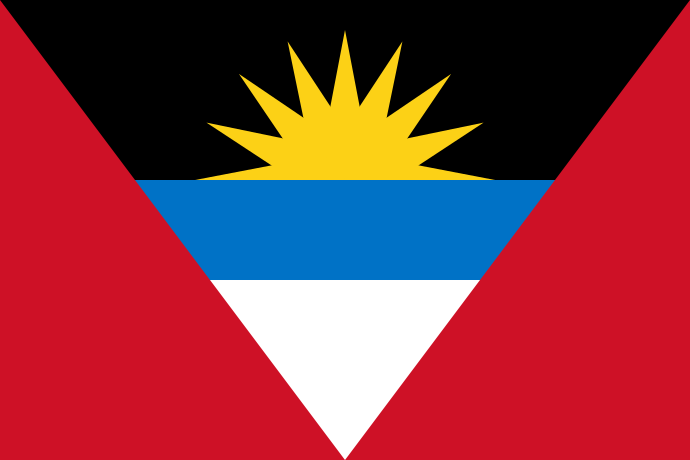
Flag of Antigua and Barbuda
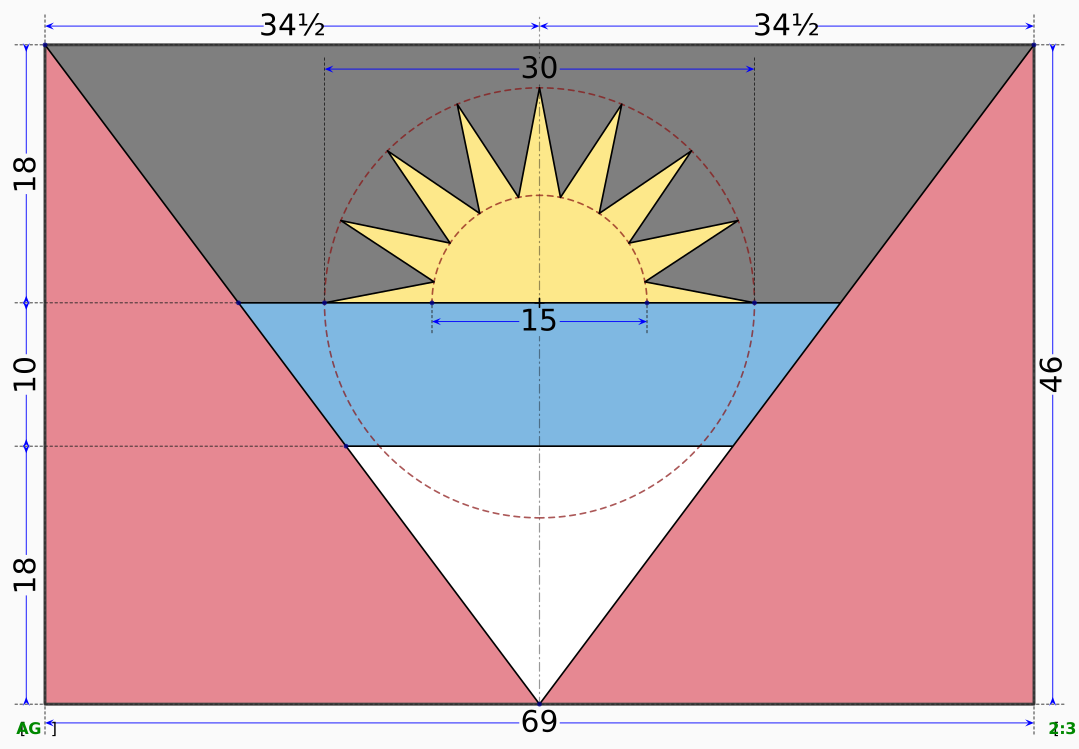
Description
- A red field bisected by an inverted isosceles triangle in black, blue, and white, with a golden half-sun rising from the base of the triangle
- Designed by Sir Reginald Samuel, a nationally celebrated artist and teacher, the flag was adopted on 27 February 1967 upon achieving Associated Statehood and retained at independence on 1 November 1981
- The rising sun symbolises the dawn of a new era; together the colours represent the sun (gold), sea (blue), African heritage (black), and energy of the people (red)
- The V-shape formed by the triangle represents victory
- Construction: on a red field, an inverted isosceles triangle with vertex at the bottom edge and base at the top edge
- Inside the triangle from top to bottom: a black band, a blue band, a white band, then a golden half-sun with rays
- Ratio 2:3
Colors in detail
Colors
| Color | RGB Hex | CMYK | Pantone |
|---|---|---|---|
| Red | #ce1126 | 0/92/82/19 | 186 C |
| Background field; represents the dynamism and energy of the people. | |||
| Blue | #0072c6 | 100/42/0/22 | 300 C |
| Horizontal band in the upper triangle; represents hope and the Caribbean Sea. | |||
| Yellow | #fcd116 | 0/17/91/1 | 116 C |
| The half-sun with rays; represents a new dawn of nationhood and the sandy beaches. | |||
| Black | #000000 | 0/0/0/100 | Black |
| Band at the base of the triangle; represents the African heritage of the people. | |||
| White | #ffffff | 0/0/0/0 | |
| Band representing the sand and beaches of the islands. | |||
| † RGB hex values are based on Wikipedia SVG. | |||
Trivia
- The sun represents new dawn and a vibrant future; the V-shape represents victory
- The colours represent the sun (gold), African heritage (black), and Caribbean waters (blue)
- Adopted in 1967 upon independence from Britain; one of the most modern flag designs among Commonwealth nations
Design
The national flag of Antigua and Barbuda is a red field with an inverted isosceles triangle based on the top edge of the field pointed toward the bottom edge of the field bearing the horizontal tricolour of black, light blue (half width) and white with the rising sun (yellow half sun with nine rays) centred on top of the black band.
Symbolism
- the rising sun symbolises the dawning of a new era
- the color black is for the African ancestry of the people
- the color blue is for hope
- the color red is for energy or life of the people
- the successive colouring of yellow, blue, and white (from the sun down) also
stands for the sun, sea, and sand
- the blue also represents the Caribbean Sea
- the V-shape is the symbol of victory
History
The flag was adopted on 27 February 1967 to mark the achievement of self-government. A competition to design the flag was held in which more than 600 local people entered. The winning design was put forth by nationally well-known artist and sculptor Sir Reginald Samuel.
json:data
{
  "ns": "antigua-and-barbuda",
  "flag": "antigua-and-barbuda/flag.svg",
  "g": "nf,caribbean",
  "id": "antigua-and-barbuda",
  "index": "c/antigua-and-barbuda",
  "title": "Flag of Antigua and Barbuda",
  "ratio": "2:3",
  "use": {
    "as": "national flag",
    "since": "1967-02-27"
  },
  "colors": [
    {
      "color": "red",
      "hex": "#CE1126",
      "cmyk": "0/92/82/19",
      "pantone": "186 C",
      "note": "Background field; represents the dynamism and energy of the people."
    },
    {
      "color": "blue",
      "hex": "#0072C6",
      "cmyk": "100/42/0/22",
      "pantone": "300 C",
      "note": "Horizontal band in the upper triangle; represents hope and the Caribbean Sea."
    },
    {
      "color": "yellow",
      "hex": "#FCD116",
      "cmyk": "0/17/91/1",
      "pantone": "116 C",
      "note": "The half-sun with rays; represents a new dawn of nationhood and the sandy beaches."
    },
    {
      "color": "black",
      "hex": "#000000",
      "cmyk": "0/0/0/100",
      "pantone": "Black",
      "note": "Band at the base of the triangle; represents the African heritage of the people."
    },
    {
      "color": "white",
      "hex": "#FFFFFF",
      "cmyk": "0/0/0/0",
      "note": "Band representing the sand and beaches of the islands."
    }
  ],
  "colorNote": "RGB hex values are based on Wikipedia SVG.",
  "article": "antigua-and-barbuda/flag.md",
  "desc": "- A red field bisected by an inverted isosceles triangle in black, blue, and white, with a golden half-sun rising from the base of the triangle\n - Designed by Sir Reginald Samuel, a nationally celebrated artist and teacher, the flag was adopted on 27 February 1967 upon achieving Associated Statehood and retained at independence on 1 November 1981\n - The rising sun symbolises the dawn of a new era; together the colours represent the sun (gold), sea (blue), African heritage (black), and energy of the people (red)\n - The V-shape formed by the triangle represents victory\n - **Construction:** on a red field, an inverted isosceles triangle with vertex at the bottom edge and base at the top edge\n - Inside the triangle from top to bottom: a black band, a blue band, a white band, then a golden half-sun with rays\n - Ratio 2:3",
  "of": {
    "country": "antigua-and-barbuda"
  },
  "countryData": {
    "name": "Antigua and Barbuda",
    "officialName": "Antigua and Barbuda",
    "un": "member"
  },
  "cs": "antigua-and-barbuda/flag.cs.svg",
  "trivia": "- The sun represents new dawn and a vibrant future; the V-shape represents victory\n - The colours represent the sun (gold), African heritage (black), and Caribbean waters (blue)\n - Adopted in 1967 upon independence from Britain; one of the most modern flag designs among Commonwealth nations",
  "_name": "Antigua and Barbuda",
  "_namespace": "antigua-and-barbuda",
  "_namePart": ""
}