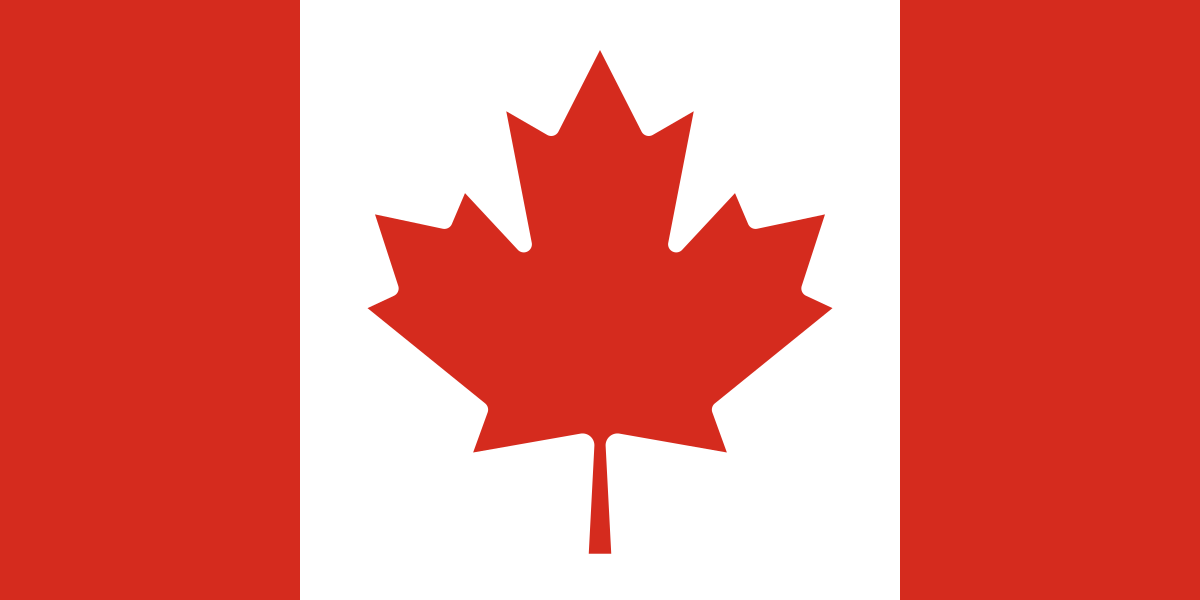
Flag of Canada
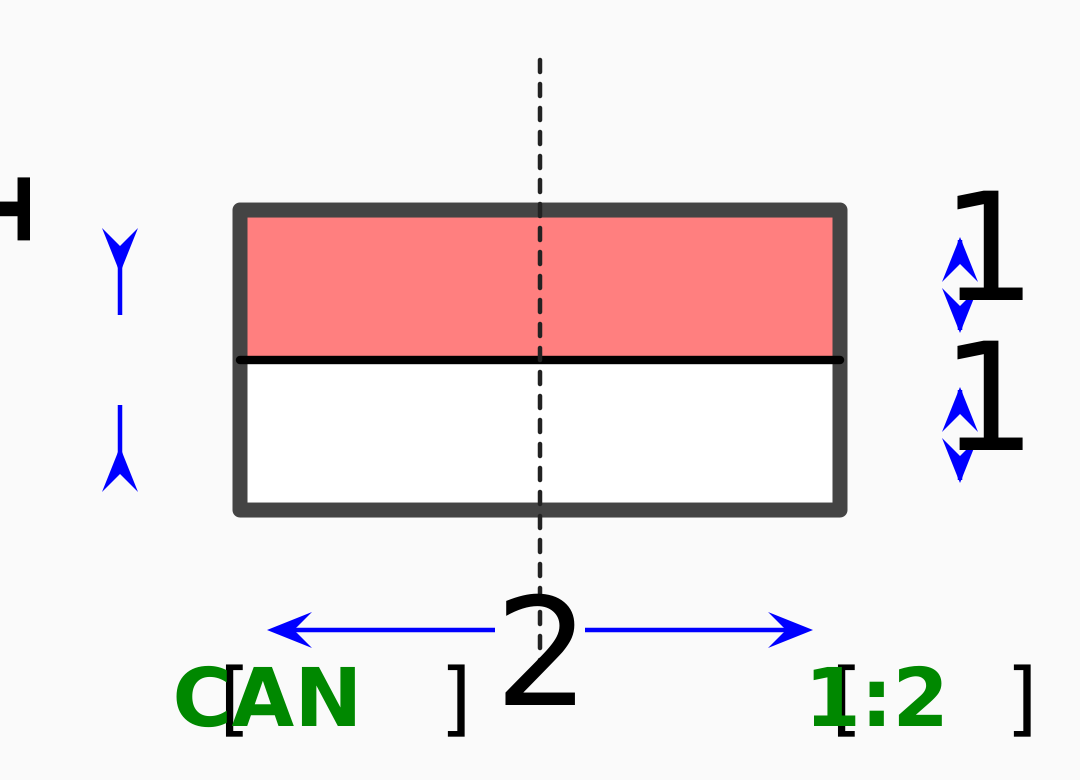
Description
- A red field with a white square in the centre containing a red eleven-pointed maple leaf
- Adopted in 1965, replacing the Red Ensign after considerable national debate
- Construction: a red-white-red vertical triband in the ratio 1:2:1
- The central white band is twice the width of each red band
- A red 11-pointed maple leaf is centred on the white band, fitting within a square whose side equals the flag's hoist
Colors in detail
| Color | RGB Hex | CMYK | Pantone |
|---|---|---|---|
| Red | #ff0000 | 0/100/100/0 | 032 C |
| Represents bravery and sacrifice | |||
| White | #ffffff | 0/0/0/0 | |
| Represents peace and honesty | |||
Trivia
- The maple leaf has 11 points — arrived at through wind tunnel testing for maximum visibility
- The red and white colours have been Canadian symbols since the 1920s
- Adopted in 1965, Canada's flag was the result of a national design contest and public debate
Flag of Canada
Canada's iconic maple leaf flag represents a distinctly Canadian national identity separate from British colonial ties. Prime Minister Lester B. Pearson proposed the new design in 1964 during fierce parliamentary debate. Over 2,600 designs were submitted by citizens, ultimately leading to George Stanley's recommendation of a single stylized maple leaf on a white field with red borders.
Heraldic artist Alan Beddoe initially designed it with 13 points, but artist Jacques St-Cyr simplified it to 11 points for improved visibility at distance. The red and white colours represent military valor and honour respectively. Officially proclaimed by Queen Elizabeth II on 28 January 1965 and inaugurated on Parliament Hill on 15 February, the flag quickly became one of the world's most recognizable national symbols.
json:data
{
  "g": "nf,north-america",
  "ns": "canada",
  "name": "Canada",
  "id": "canada",
  "index": "c/canada",
  "title": "Flag of Canada",
  "ratio": "1:2",
  "use": {
    "as": "national flag",
    "since": "1965-02-15"
  },
  "colors": [
    {
      "color": "red",
      "hex": "#FF0000",
      "cmyk": "0/100/100/0",
      "pantone": "032 C",
      "note": "Represents bravery and sacrifice"
    },
    {
      "color": "white",
      "hex": "#FFFFFF",
      "cmyk": "0/0/0/0",
      "note": "Represents peace and honesty"
    }
  ],
  "desc": "- A red field with a white square in the centre containing a red eleven-pointed maple leaf\n - Adopted in 1965, replacing the Red Ensign after considerable national debate\n - **Construction:** a red-white-red vertical triband in the ratio 1:2:1\n - The central white band is twice the width of each red band\n - A red 11-pointed maple leaf is centred on the white band, fitting within a square whose side equals the flag's hoist",
  "article": "canada/flag.md",
  "of": {
    "country": "canada"
  },
  "countryData": {
    "name": "Canada",
    "officialName": "Canada",
    "un": "member"
  },
  "cs": "canada/flag.cs.svg",
  "trivia": "- The maple leaf has 11 points — arrived at through wind tunnel testing for maximum visibility\n - The red and white colours have been Canadian symbols since the 1920s\n - Adopted in 1965, Canada's flag was the result of a national design contest and public debate",
  "flag": "canada/flag.svg",
  "_name": "Canada",
  "_namespace": "canada",
  "_namePart": ""
}