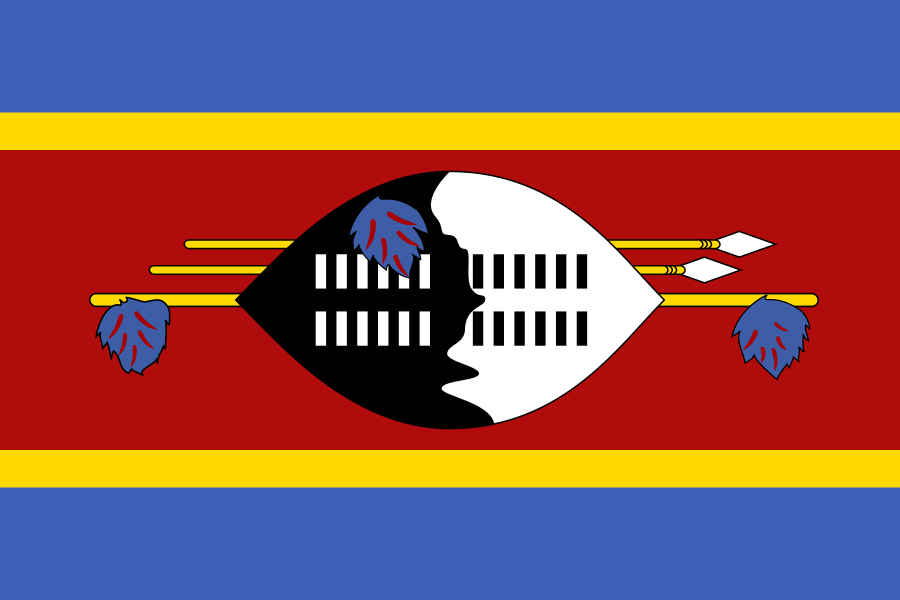
Flag of the Kingdom of Eswatini
Description
- Blue bands at top and bottom, a broad red band in the middle separated by narrow yellow stripes
- A large Nguni warrior shield flanked by two assegais and a fighting staff is centred on the red
- The decorated staff is adorned with tassels made from widowbird and lourie feathers worn by the king
Colors in detail
Colors
| Color | RGB Hex |
|---|---|
| Blue | #3e5eb9 |
| Top and bottom bands symbolising peace and stability. | |
| Yellow | #ffd900 |
| Narrow bands framing the central red, standing for the country's mineral resources. | |
| Red | #b10c0c |
| Broad central band evoking past battles for the nation. | |
| Black | #333333 |
| Elements of the central shield representing the ox-hide Nguni warrior shield. | |
| White | #ffffff |
| Elements of the shield and staff feathers symbolising the monarchy. | |
Trivia
- Based on a military banner given to the Emasotsha Regiment by King Sobhuza II in 1941
- The lidlabe shield is half black and half white to symbolise racial harmony
- The country was known as Swaziland until King Mswati III renamed it Eswatini in 2018
Flag of Eswatini
Eswatini's flag has blue bands at the top and bottom, a broad red band in the middle separated by narrow yellow stripes, and a large Nguni warrior shield with two assegais and a fighting staff centred on the red. Blue stands for peace and stability, yellow for the country's mineral wealth, and red for the battles fought for the nation.
The design is based on a military banner presented by King Sobhuza II to the Emasotsha Regiment in 1941 and was adopted as the national flag at independence on 6 October 1968. The lidlabe ox-hide shield, half black and half white, symbolises racial harmony, while the decorated staff is dressed with tassels of widowbird and lourie feathers traditionally worn by the king.
json:data
{
  "g": "nf,africa",
  "ns": "eswatini",
  "id": "eswatini",
  "index": "c/eswatini",
  "title": "Flag of the Kingdom of Eswatini",
  "ratio": "2:3",
  "colors": [
    {
      "color": "blue",
      "hex": "#3E5EB9",
      "note": "Top and bottom bands symbolising peace and stability."
    },
    {
      "color": "yellow",
      "hex": "#FFD900",
      "note": "Narrow bands framing the central red, standing for the country's mineral resources."
    },
    {
      "color": "red",
      "hex": "#B10C0C",
      "note": "Broad central band evoking past battles for the nation."
    },
    {
      "color": "black",
      "hex": "#333333",
      "note": "Elements of the central shield representing the ox-hide Nguni warrior shield."
    },
    {
      "color": "white",
      "hex": "#FFFFFF",
      "note": "Elements of the shield and staff feathers symbolising the monarchy."
    }
  ],
  "desc": "- Blue bands at top and bottom, a broad red band in the middle separated by narrow yellow stripes\n - A large Nguni warrior shield flanked by two assegais and a fighting staff is centred on the red\n - The decorated staff is adorned with tassels made from widowbird and lourie feathers worn by the king",
  "article": "eswatini/flag.md",
  "use": {
    "as": "national flag",
    "since": "1968-10-06"
  },
  "of": {
    "country": "eswatini"
  },
  "countryData": {
    "name": "Eswatini",
    "officialName": "Kingdom of Eswatini",
    "continent": "africa",
    "un": "member"
  },
  "trivia": "- Based on a military banner given to the Emasotsha Regiment by King Sobhuza II in 1941\n - The lidlabe shield is half black and half white to symbolise racial harmony\n - The country was known as Swaziland until King Mswati III renamed it Eswatini in 2018\n",
  "flag": "eswatini/flag.svg",
  "_name": "Eswatini",
  "_namespace": "eswatini",
  "_namePart": ""
}