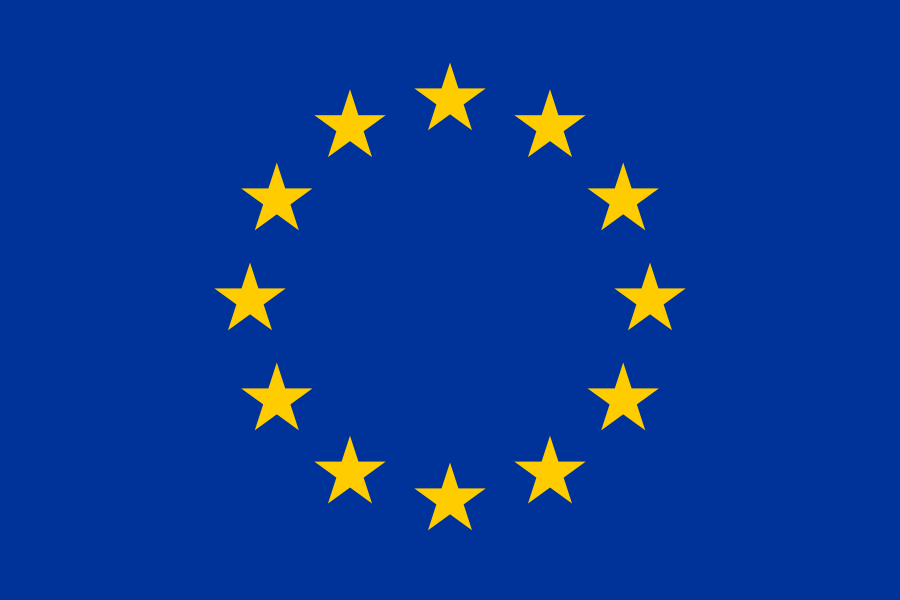
Flag of Europe / European Union
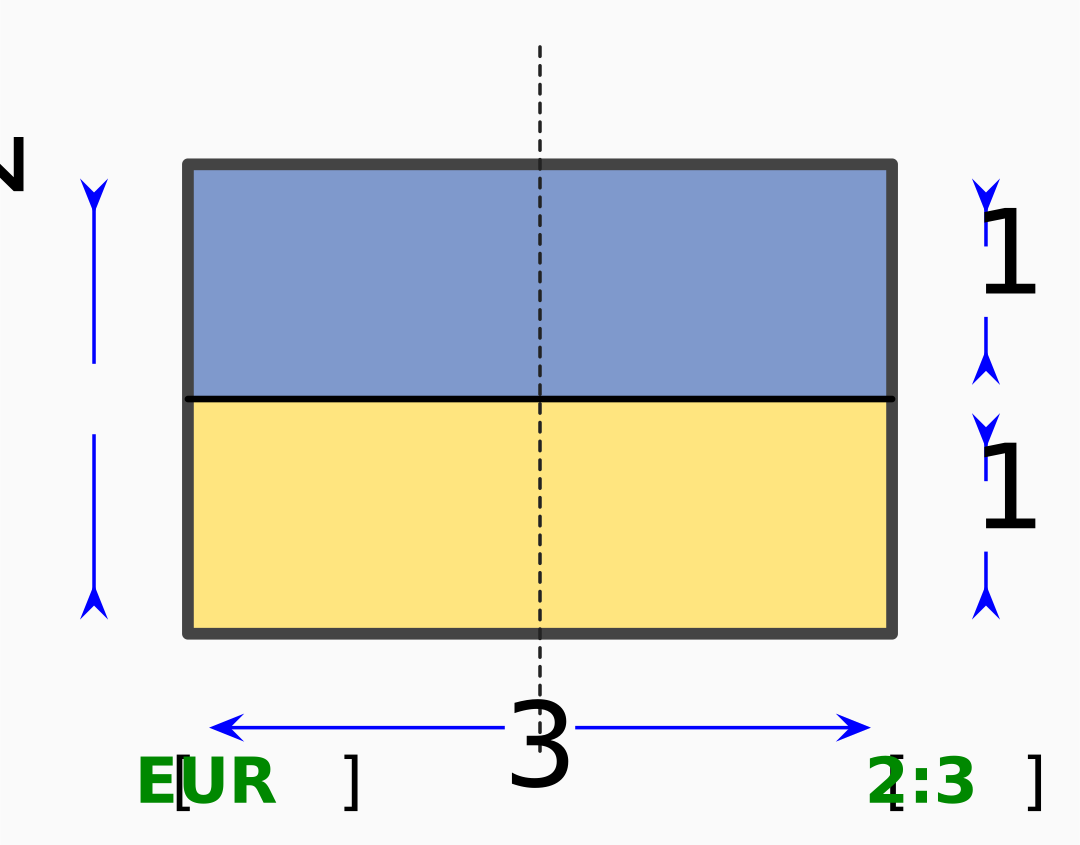
Description
- The European flag (adopted 1955 by Council of Europe, 1985 by the EU) features twelve gold stars in a circle on a blue field, symbolising unity and perfection
- Construction: a blue field (2:3 ratio) bearing a circle of twelve five-pointed gold stars centred
- The stars are upright (one point up) and evenly spaced like the hours on a clock face
- The circle diameter is one-third of the flag's hoist
- The twelve stars represent unity, not member states
Colors in detail
Colors
Trivia
- The 12 stars represent perfection and completeness, not the number of member states
- The circle represents unity and solidarity
- Adopted in 1986 and represents European integration and cooperation
Flag of Europe / European Union
The European flag (adopted 1955 by Council of Europe, 1985 by the EU) features twelve gold stars in a circle on a blue field, symbolising unity and perfection. The stars are upright (one point up) and evenly spaced like the hours on a clock face.
The 12 stars represent perfection and completeness, not the number of member states. The circle represents unity and solidarity. Adopted in 1986 and represents European integration and cooperation.
json:data
{
  "g": "intl,europe",
  "ns": "intl",
  "name": "European Union",
  "id": "european-union",
  "index": "i/european-union",
  "title": "Flag of Europe / European Union",
  "ratio": "2:3",
  "colors": [
    {
      "color": "blue",
      "hex": "#003399",
      "pantone": "Reflex Blue C",
      "cmyk": "100/67/0/40"
    },
    {
      "color": "gold",
      "hex": "#ffcc00",
      "cmyk": "0/20/100/0"
    }
  ],
  "desc": "- The European flag (adopted 1955 by Council of Europe, 1985 by the EU) features twelve gold stars in a circle on a blue field, symbolising unity and perfection\n - **Construction:** a blue field (2:3 ratio) bearing a circle of twelve five-pointed gold stars centred\n - The stars are upright (one point up) and evenly spaced like the hours on a clock face\n - The circle diameter is one-third of the flag's hoist\n - The twelve stars represent unity, not member states",
  "flag": "intl/european-union.svg",
  "countryData": {
    "name": "European Union",
    "officialName": "European Union",
    "un": "none"
  },
  "cs": "intl/european-union.cs.svg",
  "trivia": "- The 12 stars represent perfection and completeness, not the number of member states\n - The circle represents unity and solidarity\n - Adopted in 1986 and represents European integration and cooperation",
  "article": "intl/european-union.md",
  "_name": "European Union",
  "_namespace": "intl",
  "_namePart": "european-union"
}