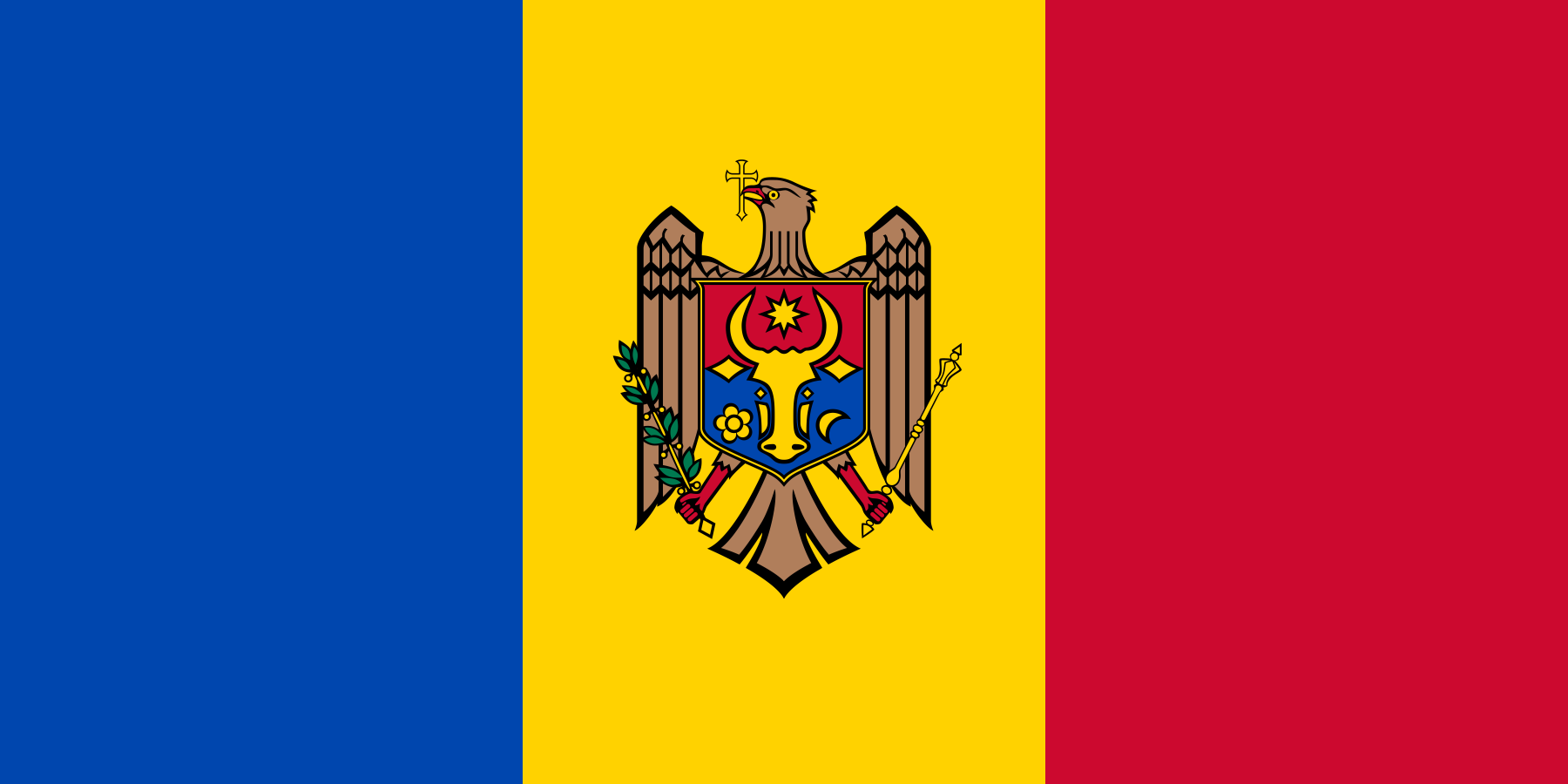
Flag of the Republic of Moldova
Description
- Three equal vertical bands of blue, yellow, and red — a pattern reflecting close historical ties with Romania
- The national coat of arms, centred on the yellow band, features an aurochs head with star, rose, and crescent
- Adopted on 27 April 1990 during the independence movement; confirmed after independence from the Soviet Union in 1991
Colors in detail
| Color | RGB Hex | CMYK |
|---|---|---|
| Blue | #0046ae | 100/75/0/20 |
| Represents the sky and freedom. | ||
| Yellow | #ffd100 | 0/15/100/0 |
| Symbolises the wheatfields and agricultural wealth of Moldova. | ||
| Red | #cc092f | 0/95/80/10 |
| Stands for sacrifice, struggle, and historical courage. | ||
| Brown | #a97142 | 0/40/70/40 |
| The aurochs head of the coat of arms — a traditional Moldavian heraldic symbol. | ||
Trivia
- Moldova is one of only a handful of countries with different designs on the obverse and reverse of its flag, as the coat of arms only appears on one side
- The aurochs head with a star between its horns is the historical emblem of the Principality of Moldavia
- The tricolour intentionally echoes Romania's flag, reflecting shared Romanian ethnic and linguistic heritage
Flag of Moldova
The flag of Moldova consists of three equal vertical bands of blue, yellow, and red, with the national coat of arms centred on the yellow stripe. The tricolour intentionally echoes that of Romania, reflecting the shared ethnic, linguistic, and cultural heritage between the two peoples. Blue represents the sky and freedom, yellow the wheatfields, and red the sacrifice and historical courage of the Moldovan people.
The coat of arms features an aurochs head with a star between its horns, flanked by a rose and a crescent, on a shield quartered red and blue — the historical emblem of the Principality of Moldavia. Adopted on 27 April 1990 during the independence movement and confirmed after the Soviet Union collapsed, Moldova's flag is one of only a handful in the world with a different appearance on the obverse and reverse.
json:data
{
  "g": "nf,europe",
  "ns": "moldova",
  "id": "moldova",
  "index": "c/moldova",
  "title": "Flag of the Republic of Moldova",
  "ratio": "1:2",
  "use": {
    "as": "national flag",
    "since": "1990-04-27"
  },
  "colors": [
    {
      "color": "blue",
      "hex": "#0046AE",
      "cmyk": "100/75/0/20",
      "note": "Represents the sky and freedom."
    },
    {
      "color": "yellow",
      "hex": "#FFD100",
      "cmyk": "0/15/100/0",
      "note": "Symbolises the wheatfields and agricultural wealth of Moldova."
    },
    {
      "color": "red",
      "hex": "#CC092F",
      "cmyk": "0/95/80/10",
      "note": "Stands for sacrifice, struggle, and historical courage."
    },
    {
      "color": "brown",
      "hex": "#A97142",
      "cmyk": "0/40/70/40",
      "note": "The aurochs head of the coat of arms — a traditional Moldavian heraldic symbol."
    }
  ],
  "desc": "- Three equal vertical bands of blue, yellow, and red — a pattern reflecting close historical ties with Romania\n - The national coat of arms, centred on the yellow band, features an aurochs head with star, rose, and crescent\n - Adopted on 27 April 1990 during the independence movement; confirmed after independence from the Soviet Union in 1991",
  "article": "moldova/flag.md",
  "of": {
    "country": "moldova"
  },
  "countryData": {
    "name": "Moldova",
    "officialName": "Republic of Moldova",
    "continent": "europe",
    "un": "member"
  },
  "trivia": "- Moldova is one of only a handful of countries with different designs on the obverse and reverse of its flag, as the coat of arms only appears on one side\n - The aurochs head with a star between its horns is the historical emblem of the Principality of Moldavia\n - The tricolour intentionally echoes Romania's flag, reflecting shared Romanian ethnic and linguistic heritage\n",
  "flag": "moldova/flag.svg",
  "_name": "Moldova",
  "_namespace": "moldova",
  "_namePart": ""
}