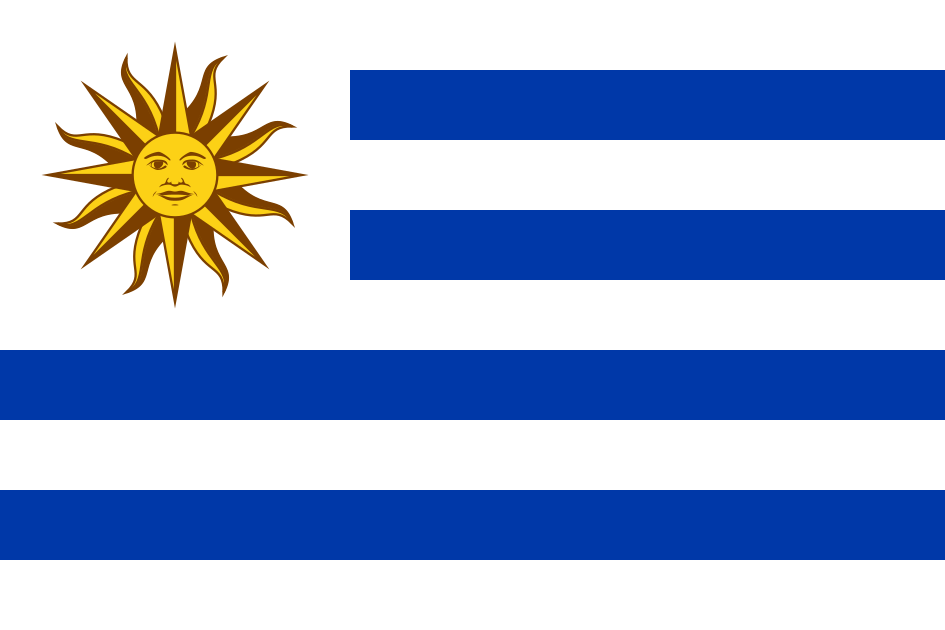
Flag of the Oriental Republic of Uruguay
Description
- Nine alternating horizontal stripes of white and blue, with a white canton bearing a golden Sun of May with a human face and sixteen rays
- Designed by Joaquin Suarez and adopted on 11 July 1830, nine months after the country's independence was confirmed
- The stripes originally numbered nineteen (one per department) but were reduced to nine for legibility in 1830
Colors in detail
Colors
| Color | RGB Hex | CMYK | Pantone |
|---|---|---|---|
| Blue | #0038a8 | 100/79/0/34 | 286 C |
| Four horizontal stripes; represent the original nine departments at independence. | |||
| White | #ffffff | 0/0/0/0 | |
| Five stripes and canton; represent peace and the anti-royalist cause. | |||
| Yellow | #fcd116 | 0/17/91/1 | 116 C |
| The Sun of May in the canton; symbolises independence and the May Revolution of 1810. | |||
Trivia
- The design was inspired by Argentina's flag, reflecting Uruguay's origins in the United Provinces of the Rio de la Plata
- The Sun of May commemorates the 25 May 1810 overthrow of Spanish rule in Buenos Aires that sparked independence across the region
- The same sun symbol appears on the flags of Argentina and on Uruguay's coat of arms
Flag of Uruguay
The flag of Uruguay consists of nine alternating horizontal stripes of white and blue, with a white canton in the upper hoist bearing the golden Sun of May, a solar face encircled by sixteen rays. Designed by Joaquin Suarez and adopted on 11 July 1830, it draws directly from the flag of Argentina and the emblems of the United Provinces of the Rio de la Plata, from which Uruguay emerged after the Cisplatine War.
The original proposal specified nineteen stripes, one for each department, but the count was reduced to nine for visual clarity. The Sun of May commemorates the May Revolution of 1810 that overthrew Spanish rule in Buenos Aires, marking the shared independence movement across the region.
json:data
{
  "g": "nf,south-america",
  "ns": "uruguay",
  "id": "uruguay",
  "index": "c/uruguay",
  "title": "Flag of the Oriental Republic of Uruguay",
  "ratio": "2:3",
  "use": {
    "as": "national flag",
    "since": "1830-07-11"
  },
  "colors": [
    {
      "color": "blue",
      "hex": "#0038A8",
      "cmyk": "100/79/0/34",
      "pantone": "286 C",
      "note": "Four horizontal stripes; represent the original nine departments at independence."
    },
    {
      "color": "white",
      "hex": "#FFFFFF",
      "cmyk": "0/0/0/0",
      "note": "Five stripes and canton; represent peace and the anti-royalist cause."
    },
    {
      "color": "yellow",
      "hex": "#FCD116",
      "cmyk": "0/17/91/1",
      "pantone": "116 C",
      "note": "The Sun of May in the canton; symbolises independence and the May Revolution of 1810."
    }
  ],
  "desc": "- Nine alternating horizontal stripes of white and blue, with a white canton bearing a golden Sun of May with a human face and sixteen rays\n - Designed by Joaquin Suarez and adopted on 11 July 1830, nine months after the country's independence was confirmed\n - The stripes originally numbered nineteen (one per department) but were reduced to nine for legibility in 1830\n",
  "article": "uruguay/flag.md",
  "of": {
    "country": "uruguay"
  },
  "countryData": {
    "name": "Uruguay",
    "officialName": "Oriental Republic of Uruguay",
    "continent": "south-america",
    "un": "member"
  },
  "trivia": "- The design was inspired by Argentina's flag, reflecting Uruguay's origins in the United Provinces of the Rio de la Plata\n - The Sun of May commemorates the 25 May 1810 overthrow of Spanish rule in Buenos Aires that sparked independence across the region\n - The same sun symbol appears on the flags of Argentina and on Uruguay's coat of arms\n",
  "flag": "uruguay/flag.svg",
  "_name": "Uruguay",
  "_namespace": "uruguay",
  "_namePart": ""
}