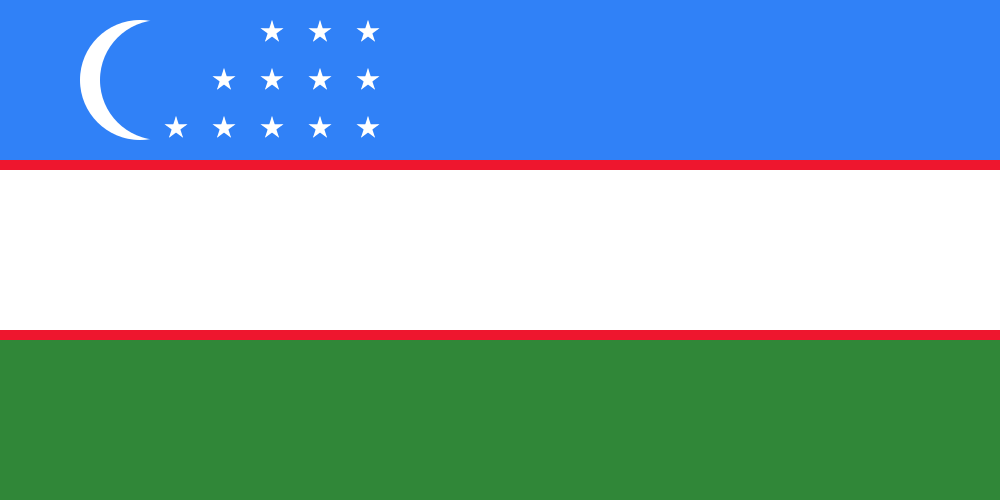
Flag of the Republic of Uzbekistan
Description
- Three horizontal bands of blue, white, and green separated by thin red fimbriations, with a white crescent and twelve white stars in the upper hoist
- Adopted on 18 November 1991 at independence from the Soviet Union
Colors in detail
| Color | RGB Hex |
|---|---|
| Blue | #0099b5 |
| Represents the eternal blue sky and life-giving water, as well as a link to the empire of Timur | |
| White | #ffffff |
| Represents peace, purity, and the striving for enlightenment | |
| Green | #1eb53a |
| Represents nature, fertility, and the renewal of life | |
| Red | #ce1126 |
| Two thin fimbriations representing the vital force within every human being | |
Trivia
- The crescent symbolises the nation's rebirth and Islamic heritage
- The twelve stars represent the twelve months of the year and the twelve signs of the Uzbek zodiac, or alternatively the twelve regions of the country
- Uzbekistan was the first post-Soviet Central Asian state to adopt a new national flag, just three months after independence
Flag of Uzbekistan
Uzbekistan was the first post-Soviet Central Asian state to adopt a new national flag, doing so on 18 November 1991, just three months after independence. The design consists of three horizontal bands of blue, white, and green separated by two thin red fimbriations, with a white crescent and twelve white stars in the upper hoist.
Blue represents the eternal sky and the life-giving water of Central Asia, echoing the banner of Timur's empire; white stands for peace, purity, and enlightenment; and green for nature, fertility, and renewal. The red stripes symbolise the vital force within every human being. The crescent marks Uzbekistan's Islamic heritage, and the twelve stars are interpreted as the twelve months of the year, the zodiac signs, or the country's administrative regions.
json:data
{
  "g": "nf,asia",
  "ns": "uzbekistan",
  "id": "uzbekistan",
  "index": "c/uzbekistan",
  "title": "Flag of the Republic of Uzbekistan",
  "ratio": "1:2",
  "colors": [
    {
      "color": "blue",
      "hex": "#0099B5",
      "note": "Represents the eternal blue sky and life-giving water, as well as a link to the empire of Timur"
    },
    {
      "color": "white",
      "hex": "#FFFFFF",
      "note": "Represents peace, purity, and the striving for enlightenment"
    },
    {
      "color": "green",
      "hex": "#1EB53A",
      "note": "Represents nature, fertility, and the renewal of life"
    },
    {
      "color": "red",
      "hex": "#CE1126",
      "note": "Two thin fimbriations representing the vital force within every human being"
    }
  ],
  "desc": "- Three horizontal bands of blue, white, and green separated by thin red fimbriations, with a white crescent and twelve white stars in the upper hoist\n - Adopted on 18 November 1991 at independence from the Soviet Union\n",
  "article": "uzbekistan/flag.md",
  "use": {
    "as": "national flag",
    "since": "1991-11-18"
  },
  "of": {
    "country": "uzbekistan"
  },
  "countryData": {
    "name": "Uzbekistan",
    "officialName": "Republic of Uzbekistan",
    "continent": "asia",
    "location": "Central Asia",
    "un": "member"
  },
  "trivia": "- The crescent symbolises the nation's rebirth and Islamic heritage\n - The twelve stars represent the twelve months of the year and the twelve signs of the Uzbek zodiac, or alternatively the twelve regions of the country\n - Uzbekistan was the first post-Soviet Central Asian state to adopt a new national flag, just three months after independence\n",
  "flag": "uzbekistan/flag.svg",
  "_name": "Uzbekistan",
  "_namespace": "uzbekistan",
  "_namePart": ""
}