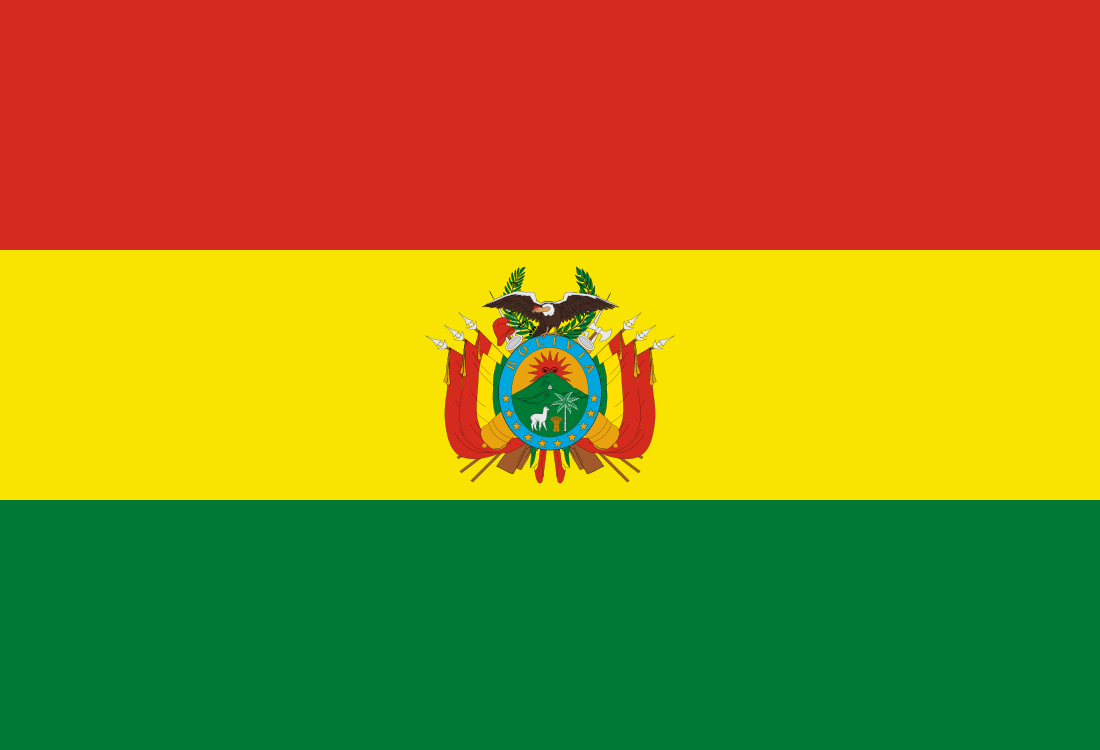
Flag of the Plurinational State of Bolivia
Description
- A horizontal tricolour of red, yellow, and green; the state flag bears the national coat of arms at the centre of the yellow band
- Adopted on 31 October 1851 during the presidency of Manuel Isidoro Belzu, replacing an earlier yellow-green-red arrangement
- The Wiphala, a square multicoloured emblem of the Andean peoples, became a dual state flag in the 2009 constitution
Colors in detail
Colors
| Color | RGB Hex | CMYK | Pantone |
|---|---|---|---|
| Red | #d52b1e | 0/86/90/10 | 186 C |
| Top band; represents the valour and blood of the nation's heroes. | |||
| Yellow | #f9e300 | 0/10/100/0 | 116 C |
| Middle band; represents the country's mineral wealth. | |||
| Green | #007934 | 100/0/80/30 | 356 C |
| Bottom band; represents the fertility of the land. | |||
Trivia
- The current order was fixed by decree in 1851 after earlier designs placed the colours in different sequences
- The Wiphala, adopted alongside the tricolour in 2009, represents Bolivia's indigenous majority and the Qullasuyu region of the Inca Empire
- The ratio of 15:22 is unusually wide among national flags
Flag of Bolivia
The flag of Bolivia is a horizontal tricolour of red, yellow, and green. The state flag, used by government institutions, bears the national coat of arms on the central yellow band; the civil flag flown by citizens omits the arms. The colour order was fixed by presidential decree on 31 October 1851 under Manuel Isidoro Belzu, replacing earlier arrangements dating to independence in 1825.
Red honours the valour and blood of those who fought for liberty, yellow represents the country's vast mineral wealth, and green stands for the fertility of its land. Since the 2009 constitution, the Wiphala, a checkered rainbow emblem of Andean peoples, has stood alongside the tricolour as a dual national flag representing Bolivia's indigenous heritage.
json:data
{
  "g": "nf,south-america",
  "ns": "bolivia",
  "id": "bolivia",
  "index": "c/bolivia",
  "title": "Flag of the Plurinational State of Bolivia",
  "ratio": "15:22",
  "use": {
    "as": "national flag",
    "since": "1851-10-31"
  },
  "colors": [
    {
      "color": "red",
      "hex": "#D52B1E",
      "cmyk": "0/86/90/10",
      "pantone": "186 C",
      "note": "Top band; represents the valour and blood of the nation's heroes."
    },
    {
      "color": "yellow",
      "hex": "#F9E300",
      "cmyk": "0/10/100/0",
      "pantone": "116 C",
      "note": "Middle band; represents the country's mineral wealth."
    },
    {
      "color": "green",
      "hex": "#007934",
      "cmyk": "100/0/80/30",
      "pantone": "356 C",
      "note": "Bottom band; represents the fertility of the land."
    }
  ],
  "desc": "- A horizontal tricolour of red, yellow, and green; the state flag bears the national coat of arms at the centre of the yellow band\n - Adopted on 31 October 1851 during the presidency of Manuel Isidoro Belzu, replacing an earlier yellow-green-red arrangement\n - The Wiphala, a square multicoloured emblem of the Andean peoples, became a dual state flag in the 2009 constitution\n",
  "article": "bolivia/flag.md",
  "of": {
    "country": "bolivia"
  },
  "countryData": {
    "name": "Bolivia",
    "officialName": "Plurinational State of Bolivia",
    "continent": "south-america",
    "un": "member"
  },
  "trivia": "- The current order was fixed by decree in 1851 after earlier designs placed the colours in different sequences\n - The Wiphala, adopted alongside the tricolour in 2009, represents Bolivia's indigenous majority and the Qullasuyu region of the Inca Empire\n - The ratio of 15:22 is unusually wide among national flags\n",
  "flag": "bolivia/flag.svg",
  "_name": "Bolivia",
  "_namespace": "bolivia",
  "_namePart": ""
}