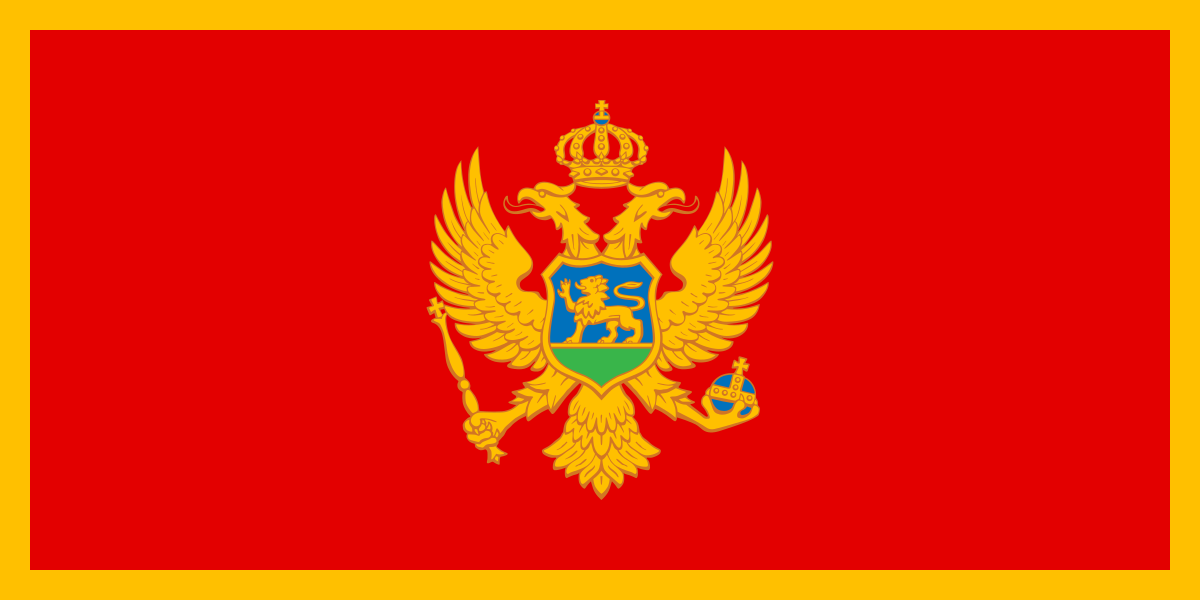
Flag of Montenegro
Description
- A red field with a gold border surrounding a central gold coat of arms
- The coat of arms features a double-headed eagle with a shield bearing a lion passant, symbols of royal and ecclesiastical authority
- Adopted on 13 July 2004 (Statehood Day) and reaffirmed after Montenegro's independence from Serbia in 2006
Colors in detail
| Color | RGB Hex | CMYK |
|---|---|---|
| Red | #c40308 | 0/100/95/20 |
| The red field derives from the historical flags of the Kingdom of Montenegro under the Petrovic-Njegos dynasty. | ||
| Gold | #d4af37 | 15/30/85/15 |
| The gold border and coat of arms evoke royalty, wealth, and tradition. | ||
Trivia
- The coat of arms revives the royal symbol of the Petrovic-Njegos dynasty that ruled until 1918
- 13 July marks both Montenegrin Statehood Day (1878 recognition at the Congress of Berlin) and the 1941 uprising against fascist occupation
- The double-headed eagle reflects Byzantine heritage shared with several neighbouring Balkan countries
Flag of Montenegro
Montenegro's flag is a red field enclosed by a gold border, with the national coat of arms centred on the field. The coat of arms features a golden double-headed eagle — inherited from Byzantine heraldic tradition and shared with several neighbouring Balkan peoples — holding a sceptre and an orb, beneath a crown. At the eagle's breast sits a shield depicting a golden lion passant, a symbol of royal and ecclesiastical authority.
Adopted on 13 July 2004 — Statehood Day, commemorating both Montenegro's 1878 international recognition at the Congress of Berlin and the 1941 uprising against fascist occupation — the design revives the royal emblem of the Petrovic-Njegos dynasty that ruled until 1918. The current flag was reaffirmed after Montenegro declared independence from its union with Serbia in 2006.
json:data
{
  "g": "nf,europe",
  "ns": "montenegro",
  "id": "montenegro",
  "index": "c/montenegro",
  "title": "Flag of Montenegro",
  "ratio": "1:2",
  "use": {
    "as": "national flag",
    "since": "2004-07-13"
  },
  "colors": [
    {
      "color": "red",
      "hex": "#C40308",
      "cmyk": "0/100/95/20",
      "note": "The red field derives from the historical flags of the Kingdom of Montenegro under the Petrovic-Njegos dynasty."
    },
    {
      "color": "gold",
      "hex": "#D4AF37",
      "cmyk": "15/30/85/15",
      "note": "The gold border and coat of arms evoke royalty, wealth, and tradition."
    }
  ],
  "desc": "- A red field with a gold border surrounding a central gold coat of arms\n - The coat of arms features a double-headed eagle with a shield bearing a lion passant, symbols of royal and ecclesiastical authority\n - Adopted on 13 July 2004 (Statehood Day) and reaffirmed after Montenegro's independence from Serbia in 2006",
  "article": "montenegro/flag.md",
  "of": {
    "country": "montenegro"
  },
  "countryData": {
    "name": "Montenegro",
    "officialName": "Montenegro",
    "continent": "europe",
    "un": "member"
  },
  "trivia": "- The coat of arms revives the royal symbol of the Petrovic-Njegos dynasty that ruled until 1918\n - 13 July marks both Montenegrin Statehood Day (1878 recognition at the Congress of Berlin) and the 1941 uprising against fascist occupation\n - The double-headed eagle reflects Byzantine heritage shared with several neighbouring Balkan countries\n",
  "flag": "montenegro/flag.svg",
  "_name": "Montenegro",
  "_namespace": "montenegro",
  "_namePart": ""
}