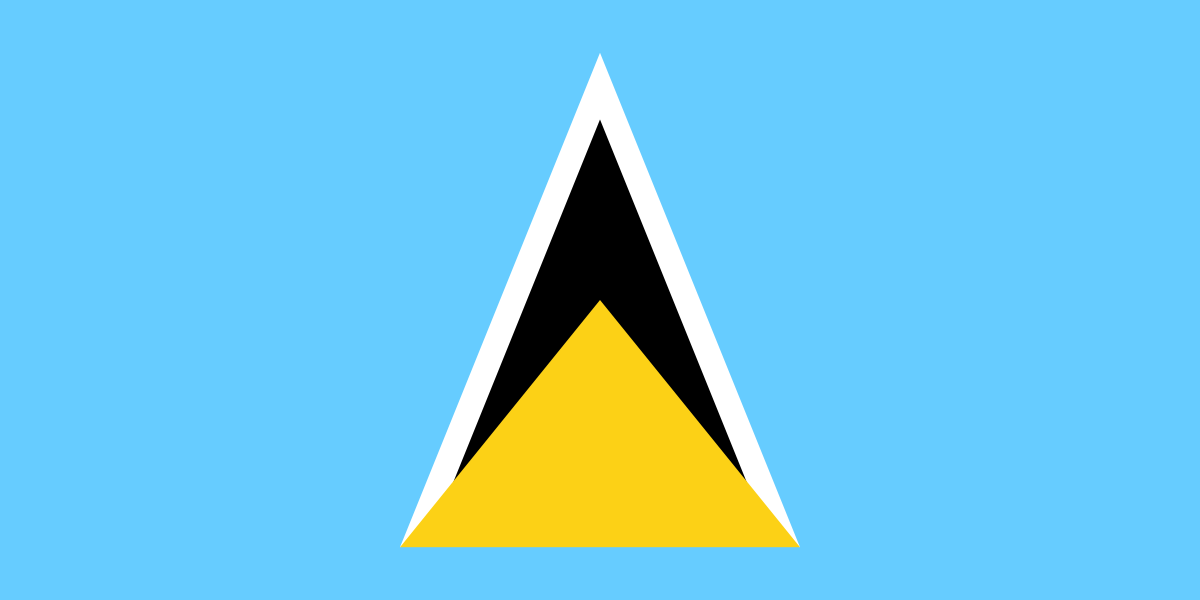
Flag of Saint Lucia
Description
- A cerulean blue field bearing a large isosceles triangle composed of a tall black triangle fimbriated in white, in front of a shorter golden triangle
- The emblem together evokes the twin volcanic plugs, the Pitons, that rise from the sea on the island's southwest coast
- Designed by Dunstan St. Omer and adopted on 1 March 1967 upon associated statehood; retained at full independence in 1979
Colors in detail
| Color | RGB Hex | CMYK | Pantone |
|---|---|---|---|
| Blue | #66ccda | 52/9/15/0 | 311 C |
| Background field; represents the sky and the Caribbean and Atlantic waters around the island. | |||
| Gold | #ffce00 | 0/19/100/0 | 116 C |
| Triangle inside the white and black triangles; represents sunshine and prosperity. | |||
| Black | #000000 | 0/0/0/100 | |
| The large black triangle on top; represents the dominant African heritage of the people. | |||
| White | #ffffff | 0/0/0/0 | |
| Narrow border around the black triangle; represents the European cultural contribution. | |||
Trivia
- The two triangles represent the Pitons, Gros Piton and Petit Piton, volcanic plugs that are a UNESCO World Heritage Site and an iconic symbol of the island
- The designer, Dunstan St. Omer, was a noted Saint Lucian painter and close friend of Nobel laureate Derek Walcott
- The flag's hue has been adjusted twice since 1967 to lighten the blue and make it more distinct from other Caribbean flags
Flag of Saint Lucia
The flag of Saint Lucia shows a cerulean blue field bearing a striking central emblem: a tall black isosceles triangle bordered in white, set in front of a shorter golden triangle. Together the shapes evoke the Pitons, the twin volcanic plugs that rise dramatically from the sea on the island's southwest coast and give Saint Lucia its most recognisable silhouette. It was designed by the Saint Lucian painter Dunstan St. Omer, a close friend of Nobel laureate Derek Walcott.
The blue field represents the sky and the surrounding Caribbean and Atlantic waters. Gold stands for sunshine and prosperity, black for the dominant African heritage of the people, and the thin white border for the European cultural contribution. The flag was first raised on 1 March 1967 at the achievement of associated statehood and retained at full independence in 1979.
json:data
{
  "g": "nf,caribbean",
  "ns": "saint-lucia",
  "id": "saint-lucia",
  "index": "c/saint-lucia",
  "title": "Flag of Saint Lucia",
  "ratio": "1:2",
  "use": {
    "as": "national flag",
    "since": "1967-03-01"
  },
  "colors": [
    {
      "color": "blue",
      "hex": "#66CCDA",
      "cmyk": "52/9/15/0",
      "pantone": "311 C",
      "note": "Background field; represents the sky and the Caribbean and Atlantic waters around the island."
    },
    {
      "color": "gold",
      "hex": "#FFCE00",
      "cmyk": "0/19/100/0",
      "pantone": "116 C",
      "note": "Triangle inside the white and black triangles; represents sunshine and prosperity."
    },
    {
      "color": "black",
      "hex": "#000000",
      "cmyk": "0/0/0/100",
      "note": "The large black triangle on top; represents the dominant African heritage of the people."
    },
    {
      "color": "white",
      "hex": "#FFFFFF",
      "cmyk": "0/0/0/0",
      "note": "Narrow border around the black triangle; represents the European cultural contribution."
    }
  ],
  "desc": "- A cerulean blue field bearing a large isosceles triangle composed of a tall black triangle fimbriated in white, in front of a shorter golden triangle\n - The emblem together evokes the twin volcanic plugs, the Pitons, that rise from the sea on the island's southwest coast\n - Designed by Dunstan St. Omer and adopted on 1 March 1967 upon associated statehood; retained at full independence in 1979\n",
  "article": "saint-lucia/flag.md",
  "of": {
    "country": "saint-lucia"
  },
  "countryData": {
    "name": "Saint Lucia",
    "officialName": "Saint Lucia",
    "continent": "north-america",
    "un": "member"
  },
  "trivia": "- The two triangles represent the Pitons, Gros Piton and Petit Piton, volcanic plugs that are a UNESCO World Heritage Site and an iconic symbol of the island\n - The designer, Dunstan St. Omer, was a noted Saint Lucian painter and close friend of Nobel laureate Derek Walcott\n - The flag's hue has been adjusted twice since 1967 to lighten the blue and make it more distinct from other Caribbean flags\n",
  "flag": "saint-lucia/flag.svg",
  "_name": "Saint Lucia",
  "_namespace": "saint-lucia",
  "_namePart": ""
}