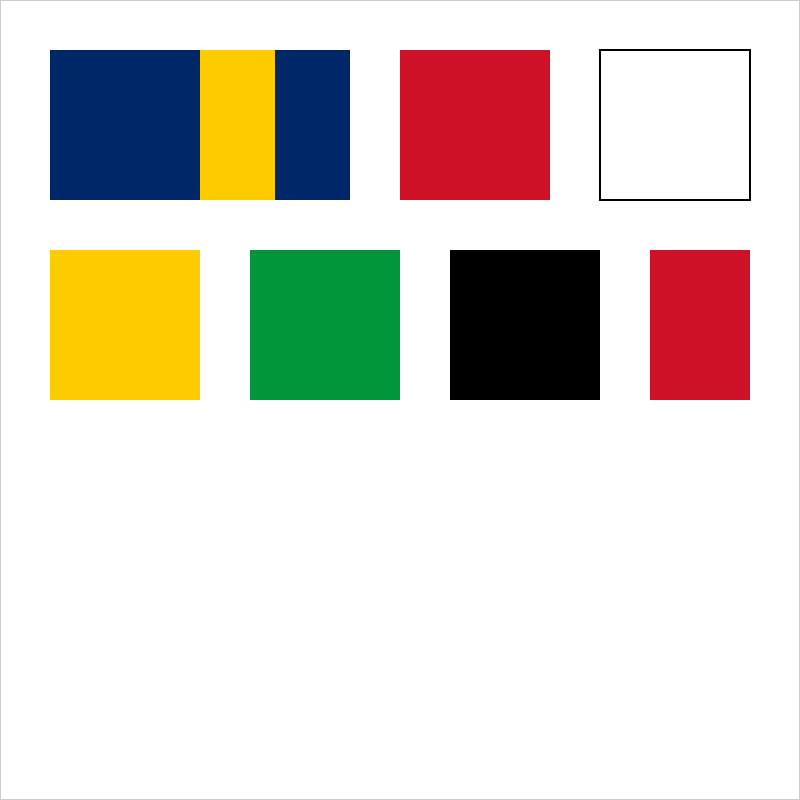
International Maritime Signal Flags
Description
- The International Code of Signals uses 26 alphabetical signal flags, 10 numerical pennants, and several special flags to communicate between ships at sea
- Developed from earlier systems dating to the 17th century, the current International Code was adopted in 1857 and revised by the IMO
- Each flag represents a letter and also has a specific meaning when flown individually
- Construction: varies by flag
- The signal flags use a standardised set of colours and geometric patterns (stripes, crosses, triangles) for maximum visibility at sea
- Ratio typically 3:4 for rectangular flags
Trivia
- Each International Code signal flag has a single-letter meaning when flown alone
- 'B' (Bravo) means 'I am loading, unloading, or carrying dangerous cargo'
- All 26 letter flags have distinct meanings used in naval and maritime communication
International Maritime Signal Flags
The International Code of Signals uses 26 alphabetical signal flags, 10 numerical pennants, and several special flags to communicate between ships at sea. Developed from earlier systems dating to the 17th century, the current International Code was adopted in 1857 and revised by the IMO.
Each International Code signal flag has a single-letter meaning when flown alone. 'B' (Bravo) means 'I am loading, unloading, or carrying dangerous cargo'. All 26 letter flags have distinct meanings used in naval and maritime communication.
json:data
{
  "g": "maritime",
  "ns": "maritime",
  "name": "International Signal Flags",
  "title": "International Maritime Signal Flags",
  "id": "signal-flags",
  "index": "m/international-signal-flags",
  "ratio": "1:1",
  "colors": [],
  "desc": "- The International Code of Signals uses 26 alphabetical signal flags, 10 numerical pennants, and several special flags to communicate between ships at sea\n - Developed from earlier systems dating to the 17th century, the current International Code was adopted in 1857 and revised by the IMO\n - Each flag represents a letter and also has a specific meaning when flown individually\n - **Construction:** varies by flag\n - The signal flags use a standardised set of colours and geometric patterns (stripes, crosses, triangles) for maximum visibility at sea\n - Ratio typically 3:4 for rectangular flags",
  "flag": "maritime/signal-flags.svg",
  "countryData": {
    "name": "International Maritime Signal Flags",
    "officialName": "International Code of Signals",
    "un": "none"
  },
  "cs": "maritime/signal-flags.cs.svg",
  "trivia": "- Each International Code signal flag has a single-letter meaning when flown alone\n - 'B' (Bravo) means 'I am loading, unloading, or carrying dangerous cargo'\n - All 26 letter flags have distinct meanings used in naval and maritime communication",
  "article": "maritime/signal-flags.md",
  "_name": "International Signal Flags",
  "_namespace": "maritime",
  "_namePart": "signal-flags"
}