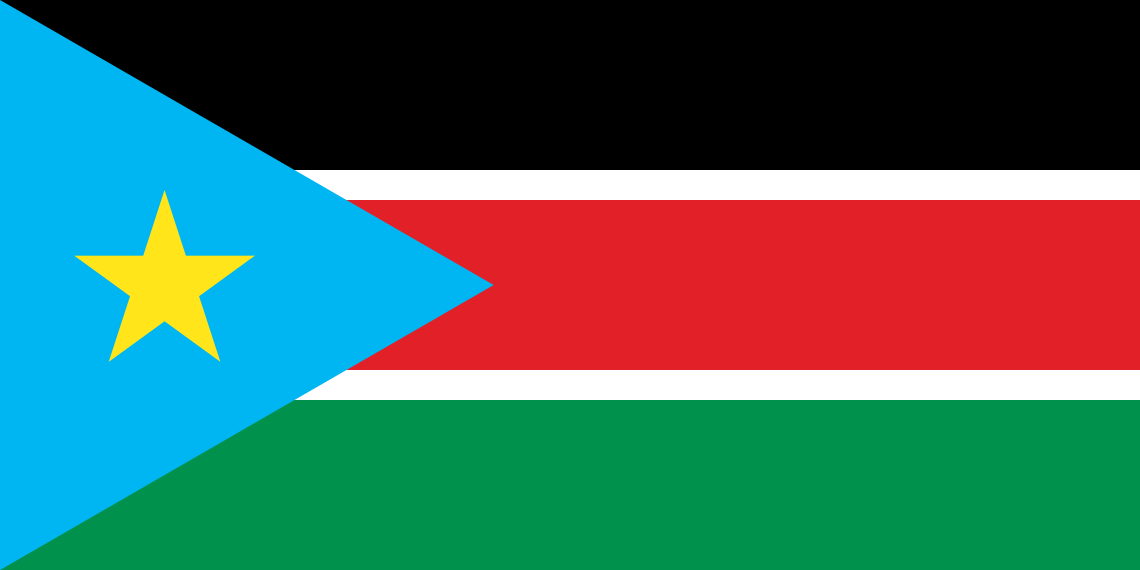
Flag of the Republic of South Sudan
Description
- Three horizontal bands of black, red, and green separated by thin white fimbriations
- A blue equilateral triangle at the hoist contains a gold five-pointed star known as the Star of Bethlehem
- Adopted on 9 July 2005 as the flag of the autonomous region of Southern Sudan; retained at independence on 9 July 2011
Colors in detail
| Color | RGB Hex |
|---|---|
| Black | #000000 |
| Represents the people of South Sudan. | |
| Red | #ce1126 |
| Symbolises the blood shed in the struggle for independence. | |
| Green | #078930 |
| Represents the verdant land, agriculture, and progress. | |
| White | #ffffff |
| The white fimbriations stand for peace. | |
| Blue | #0f47af |
| Represents the waters of the Nile, the source of life. | |
| Yellow | #fcdd09 |
| The yellow star represents unity and the guidance of the nation's people. | |
Trivia
- South Sudan is the world's youngest internationally recognised country, independent since 9 July 2011
- The flag had already flown as the banner of the Sudan People's Liberation Movement and Army
- The gold star is sometimes called the Star of Bethlehem
- It is among the few flags to use the Pan-African palette plus blue and yellow from the Kenya-inspired tradition
Flag of South Sudan
South Sudan's flag features three horizontal bands of black, red, and green separated by narrow white fimbriations, with a blue equilateral triangle at the hoist bearing a gold five-pointed star. Originally adopted on 9 July 2005 as the flag of the autonomous region of Southern Sudan following the Comprehensive Peace Agreement, it was retained at independence from Sudan on 9 July 2011. The design is closely modelled on the banner of the Sudan People's Liberation Movement, which led the long struggle for self-determination.
Black represents the people of South Sudan, red the blood of those who fell in the liberation wars, and green the country's fertile land and agricultural potential. The white fimbriations signify peace. Blue stands for the waters of the Nile, and the gold star, sometimes called the Star of Bethlehem, symbolises the unity of the states that make up the world's newest country.
json:data
{
  "g": "nf,africa",
  "ns": "south-sudan",
  "id": "south-sudan",
  "index": "c/south-sudan",
  "title": "Flag of the Republic of South Sudan",
  "ratio": "1:2",
  "colors": [
    {
      "color": "black",
      "hex": "#000000",
      "note": "Represents the people of South Sudan."
    },
    {
      "color": "red",
      "hex": "#CE1126",
      "note": "Symbolises the blood shed in the struggle for independence."
    },
    {
      "color": "green",
      "hex": "#078930",
      "note": "Represents the verdant land, agriculture, and progress."
    },
    {
      "color": "white",
      "hex": "#FFFFFF",
      "note": "The white fimbriations stand for peace."
    },
    {
      "color": "blue",
      "hex": "#0F47AF",
      "note": "Represents the waters of the Nile, the source of life."
    },
    {
      "color": "yellow",
      "hex": "#FCDD09",
      "note": "The yellow star represents unity and the guidance of the nation's people."
    }
  ],
  "desc": "- Three horizontal bands of black, red, and green separated by thin white fimbriations\n - A blue equilateral triangle at the hoist contains a gold five-pointed star known as the Star of Bethlehem\n - Adopted on 9 July 2005 as the flag of the autonomous region of Southern Sudan; retained at independence on 9 July 2011",
  "article": "south-sudan/flag.md",
  "use": {
    "as": "national flag",
    "since": "2011-07-09"
  },
  "of": {
    "country": "south-sudan"
  },
  "countryData": {
    "name": "South Sudan",
    "officialName": "Republic of South Sudan",
    "continent": "africa",
    "location": "East Africa, Nile basin",
    "un": "member"
  },
  "trivia": "- South Sudan is the world's youngest internationally recognised country, independent since 9 July 2011\n - The flag had already flown as the banner of the Sudan People's Liberation Movement and Army\n - The gold star is sometimes called the Star of Bethlehem\n - It is among the few flags to use the Pan-African palette plus blue and yellow from the Kenya-inspired tradition",
  "flag": "south-sudan/flag.svg",
  "_name": "South Sudan",
  "_namespace": "south-sudan",
  "_namePart": ""
}