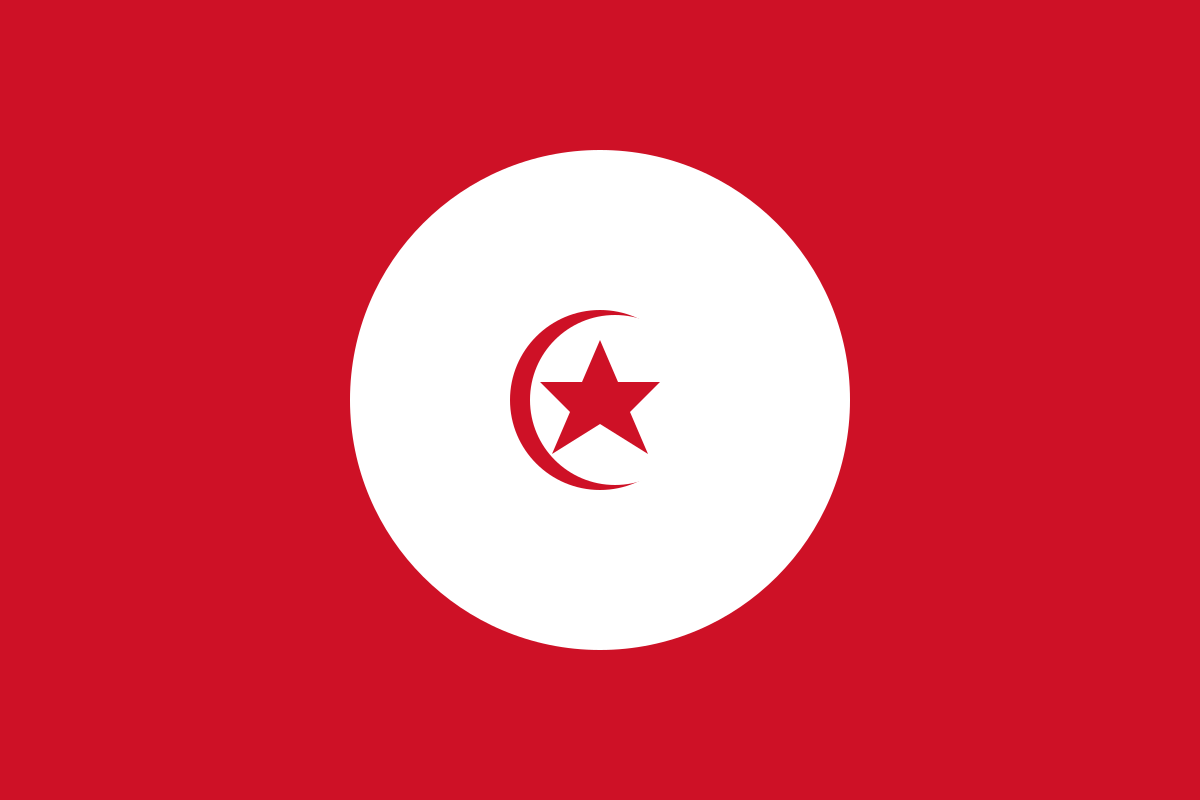
Flag of the Republic of Tunisia
Description
- A red field with a white disc centred, containing a red crescent encircling a red five-pointed star
- The flag is one of the oldest in the modern Arab world, dating to 1831 under the Husainid Bey Al-Husayn II ibn Mahmud
- It was officially adopted in its current form upon independence on 1 June 1959
- The crescent and star are traditional symbols of Islam; the red field recalls Tunisia's Ottoman heritage
- The design has influenced several other national flags in the region, particularly Turkey's
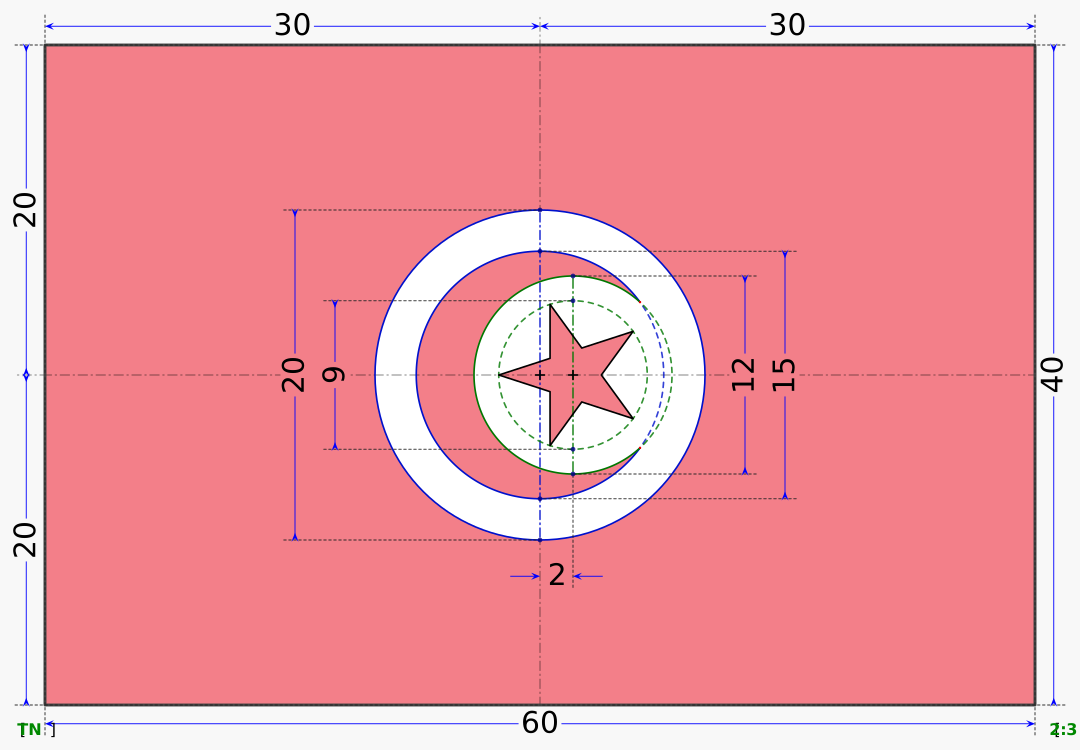
- Construction: a red field with a white circle of diameter approximately one-third the flag height, centred
- A red crescent (opening to the right) and a small red five-pointed star sit within the white disc
- Ratio 2:3
Colors in detail
Colors
| Color | RGB Hex | CMYK | Pantone |
|---|---|---|---|
| Red | #e70013 | 0/100/92/9 | 186 C |
| Field colour; represents the blood of martyrs who died fighting Ottoman and colonial rule. | |||
| White | #ffffff | 0/0/0/0 | |
| Central disc and crescent/star; symbolises peace. | |||
Trivia
- The crescent and star represent Islam; the red represents bloodshed for independence
- The white disc emphasizes Islamic symbolism and purity
- Tunisia adopted this flag in 1956 upon independence from France
Flag of the Republic of Tunisia
A red field with a white disc centred, containing a red crescent encircling a red five-pointed star. The flag is one of the oldest in the modern Arab world, dating to 1831 under the Husainid Bey Al-Husayn II ibn Mahmud. It was officially adopted in its current form upon independence on 1 June 1959.
The crescent and star represent Islam; the red represents bloodshed for independence. The white disc emphasizes Islamic symbolism and purity. Tunisia adopted this flag in 1956 upon independence from France.
json:data
{
  "g": "nf,af,arab,maghreb",
  "ns": "tunisia",
  "name": "Tunisia",
  "id": "tunisia",
  "index": "c/tunisia",
  "title": "Flag of the Republic of Tunisia",
  "ratio": "2:3",
  "use": {
    "as": "national flag and ensign",
    "since": "1999-07-03"
  },
  "colors": [
    {
      "color": "red",
      "hex": "#E70013",
      "cmyk": "0/100/92/9",
      "pantone": "186 C",
      "note": "Field colour; represents the blood of martyrs who died fighting Ottoman and colonial rule."
    },
    {
      "color": "white",
      "hex": "#FFFFFF",
      "cmyk": "0/0/0/0",
      "note": "Central disc and crescent/star; symbolises peace."
    }
  ],
  "desc": "- A red field with a white disc centred, containing a red crescent encircling a red five-pointed star\n - The flag is one of the oldest in the modern Arab world, dating to 1831 under the Husainid Bey Al-Husayn II ibn Mahmud\n - It was officially adopted in its current form upon independence on 1 June 1959\n - The crescent and star are traditional symbols of Islam; the red field recalls Tunisia's Ottoman heritage\n - The design has influenced several other national flags in the region, particularly Turkey's\n - **Construction:** a red field with a white circle of diameter approximately one-third the flag height, centred\n - A red crescent (opening to the right) and a small red five-pointed star sit within the white disc\n - Ratio 2:3",
  "of": {
    "country": "tunisia"
  },
  "countryData": {
    "name": "Tunisia",
    "officialName": "Republic of Tunisia",
    "un": "member"
  },
  "cs": "tunisia/flag.cs.svg",
  "trivia": "- The crescent and star represent Islam; the red represents bloodshed for independence\n - The white disc emphasizes Islamic symbolism and purity\n - Tunisia adopted this flag in 1956 upon independence from France",
  "article": "tunisia/flag.md",
  "flag": "tunisia/flag.svg",
  "_name": "Tunisia",
  "_namespace": "tunisia",
  "_namePart": ""
}