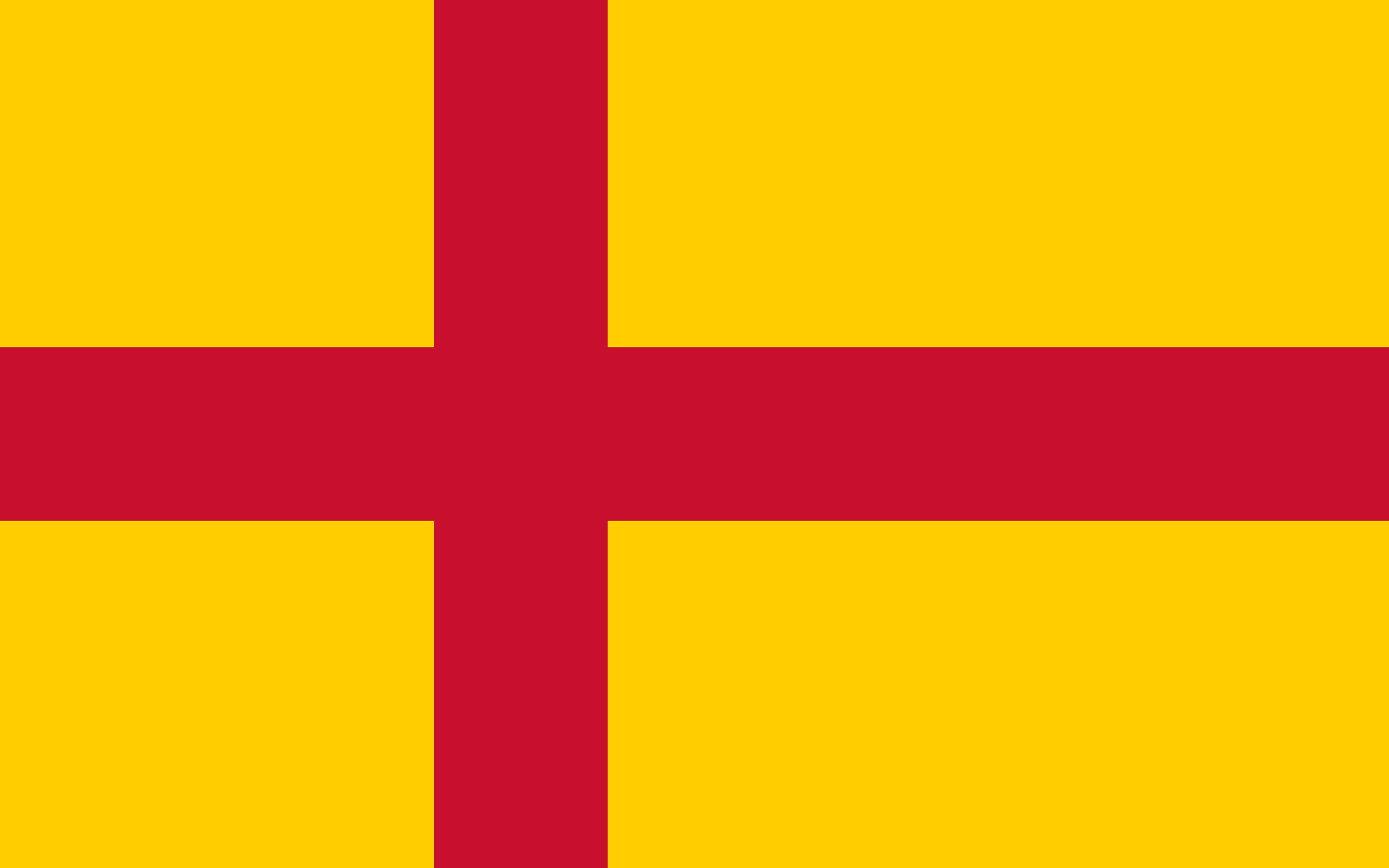
Flag of the Kalmar Union
Description
- The Kalmar Union (1397–1523) was a personal union of Denmark, Sweden, and Norway under a single monarch — the closest medieval Scandinavia came to political unity
- Construction: a yellow field with a red Nordic cross (off-centre toward the hoist) — reconstructed from Johannes Rotche's 15th-century armorial and period coin depictions
- No authenticated fabric flag survives; the design is inferred from contemporary heraldic sources
Colors in detail
Colors
| Color | RGB Hex |
|---|---|
| Yellow | #fcd116 |
| Field of the union banner. | |
| Red | #d50000 |
| Nordic cross of the Union. | |
Trivia
- Named for the Swedish town of Kalmar where the founding treaty was signed
- Dissolved when Gustav Vasa led Sweden to independence after the Stockholm Bloodbath (1520)
- Denmark and Norway remained in personal union until 1814
json:data
{
  "g": "h,empire,europe",
  "ns": "empires",
  "name": "Kalmar Union",
  "now": "denmark",
  "years": "1397–1523",
  "id": "kalmar-union",
  "index": "c/denmark:1397",
  "title": "Flag of the Kalmar Union",
  "ratio": "7:9",
  "colors": [
    {
      "color": "yellow",
      "hex": "#fcd116",
      "note": "Field of the union banner."
    },
    {
      "color": "red",
      "hex": "#d50000",
      "note": "Nordic cross of the Union."
    }
  ],
  "desc": "- The Kalmar Union (1397–1523) was a personal union of Denmark, Sweden, and Norway under a single monarch — the closest medieval Scandinavia came to political unity\n - **Construction:** a yellow field with a red Nordic cross (off-centre toward the hoist) — reconstructed from Johannes Rotche's 15th-century armorial and period coin depictions\n - No authenticated fabric flag survives; the design is inferred from contemporary heraldic sources",
  "flag": "empires/kalmar-union.svg",
  "countryData": {
    "name": "Kalmar Union",
    "officialName": "Kalmarunionen",
    "un": "none"
  },
  "trivia": "- Named for the Swedish town of Kalmar where the founding treaty was signed\n - Dissolved when Gustav Vasa led Sweden to independence after the Stockholm Bloodbath (1520)\n - Denmark and Norway remained in personal union until 1814",
  "_name": "Kalmar Union",
  "_namespace": "empires",
  "_namePart": "kalmar-union"
}