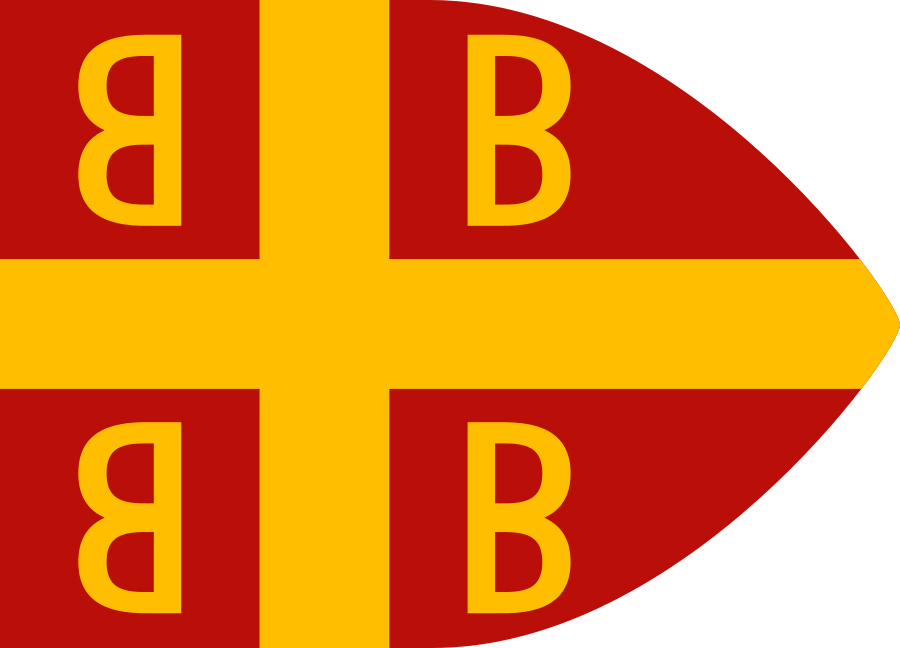
Flag of the Byzantine Empire

Description
- The Byzantine (Eastern Roman) Empire used a gold or purple field with a double-headed eagle, symbolising the empire spanning Europe and Asia
- Construction: a red or purple field bearing a gold double-headed eagle. The eagle symbolised the empire's dominion over East and West
Colors in detail
Colors
| Color | RGB Hex | CMYK |
|---|---|---|
| Gold | #ffd700 | 0/16/100/0 |
| Purple | #6a0dad | 39/92/0/32 |
| Imperial purple of the Byzantine court. | ||
Trivia
- The Byzantine Empire (330–1453) was the continuation of the Roman Empire in the East
- The purple colour represented imperial authority and divinity
- The double-headed eagle became the most recognisable Byzantine symbol
Flag of the Byzantine Empire
The Byzantine (Eastern Roman) Empire used a gold or purple field with a double-headed eagle, symbolising the empire spanning Europe and Asia.
The Byzantine Empire (330–1453) was the continuation of the Roman Empire in the East. The purple colour represented imperial authority and divinity. The double-headed eagle became the most recognisable Byzantine symbol.
json:data
{
  "g": "h,empire,europe",
  "ns": "empires",
  "name": "Byzantine Empire",
  "now": "turkey",
  "years": "330–1453",
  "id": "byzantine",
  "index": "c/turkey:330",
  "title": "Flag of the Byzantine Empire",
  "ratio": "2:3",
  "colors": [
    {
      "color": "gold",
      "hex": "#ffd700",
      "cmyk": "0/16/100/0"
    },
    {
      "color": "purple",
      "hex": "#6a0dad",
      "cmyk": "39/92/0/32",
      "note": "Imperial purple of the Byzantine court."
    }
  ],
  "desc": "- The Byzantine (Eastern Roman) Empire used a gold or purple field with a double-headed eagle, symbolising the empire spanning Europe and Asia\n - **Construction:** a red or purple field bearing a gold double-headed eagle. The eagle symbolised the empire's dominion over East and West",
  "flag": "empires/byzantine.svg",
  "countryData": {
    "name": "Byzantine Empire",
    "officialName": "Byzantine Empire (Eastern Roman Empire)",
    "un": "none"
  },
  "cs": "empires/byzantine.cs.svg",
  "trivia": "- The Byzantine Empire (330–1453) was the continuation of the Roman Empire in the East\n - The purple colour represented imperial authority and divinity\n - The double-headed eagle became the most recognisable Byzantine symbol",
  "article": "empires/byzantine.md",
  "_name": "Byzantine Empire",
  "_namespace": "empires",
  "_namePart": "byzantine"
}